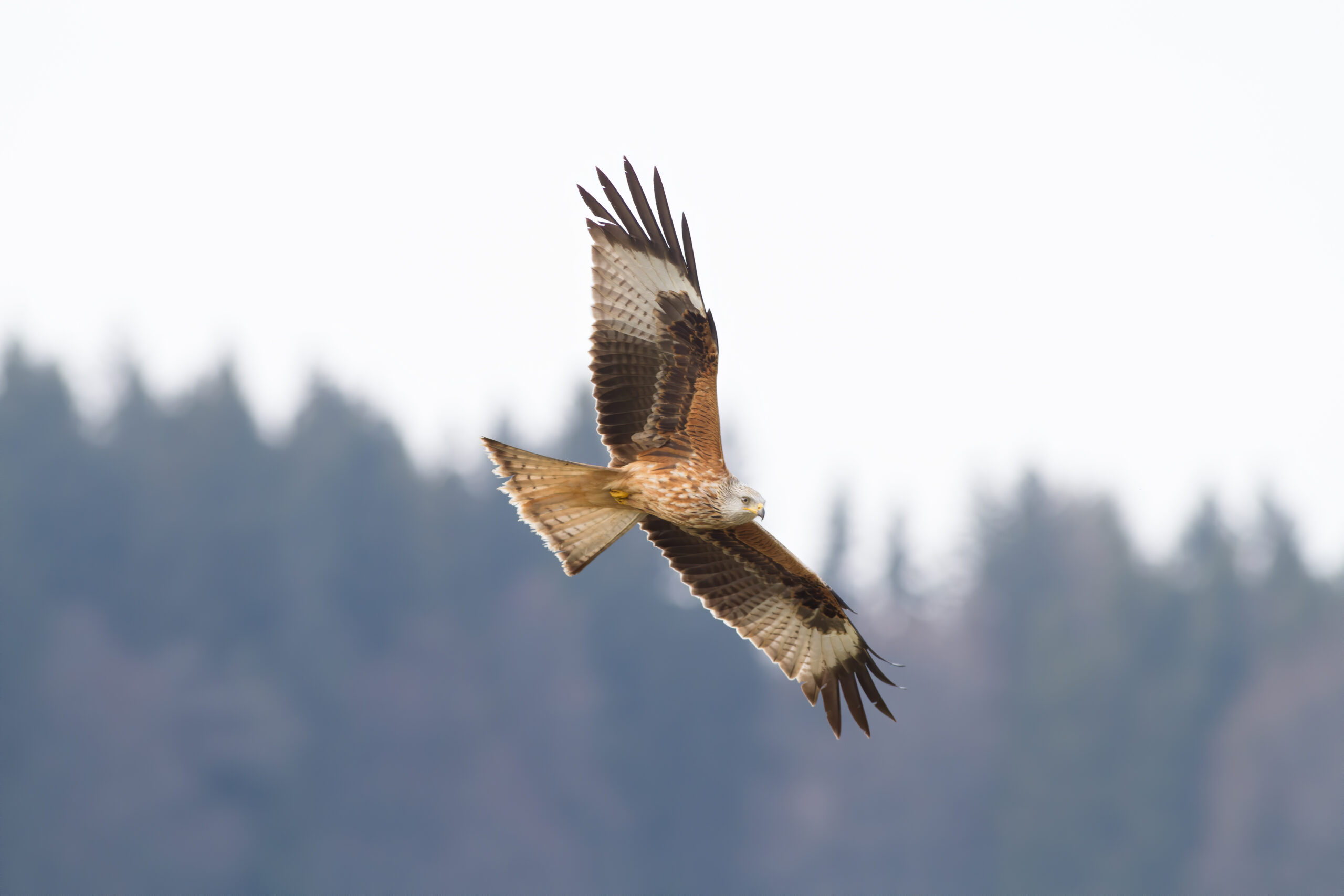

Determining the Breeding Success of Red Kites (Milvus milvus) using GPS Telemetry
Résumé
GPS-telemetry data in the field of movement ecology nowadays enable a wide range of remote analyses, providing valuable information on animal movement patterns and hence individual behaviours. The breeding behaviour of birds is an important subject of study in ornithology. There are several methods to analyse certain aspects of the breeding cycle using GPS movement data, such as locating a nest site. However, there is no approach that allows to analyse all relevant aspects of the breeding cycle separately and to derive breeding success from their combination. Based on GPS movement data of red kites (Milvus milvus), this work presents a modular algorithm that enables an analysis of their breeding phenology. In a first step, area calculations and centroid displacements are used to estimate the size of a bird’s home range, from which it can be concluded whether a bird has settled or not. In asecond step,revisitationsand residence time are calculated todetermine locationsthatare highly frequented and therefore represent potential nest sites. In a third step, a multinomial logistic regression model predicts the daily probability that an individual is incubating the eggs, feeding the nestlings or not breeding at all. In a final step, a classification method is used to determine the success of a brood. The GPS movement data of red kites used for the development of the algorithm were provided by the Swiss Ornithological Institute. The evaluation of the algorithm showed that home ranges can be detected with an accuracy of 77% and nests with an accuracy of 88%, while most predicted nest locations (95%) were within a radius of less than 120 metres from the actual nest. The multinomial logistic regression model correctly predicts whether an individual is breeding, feeding or not breeding for 64-76% of all days, depending on the approach to adjust the predictions. Despite the good results for the sub-steps of the algorithm, the developed classification method could not reliably determine the breeding success. This work contributes to advances in the application of remote monitoring of movement behaviour for the analysis of red kite breeding phenology, as the developed sub-steps can be applied with high reliability and can even be transferred to other red kite sub-populations in its distribution range. Important insights into the movement patterns of red kites during the breeding cycle could be gained, which contributes to the understanding of the species and can improve its conservation.
Collaboratrices et collaborateurs