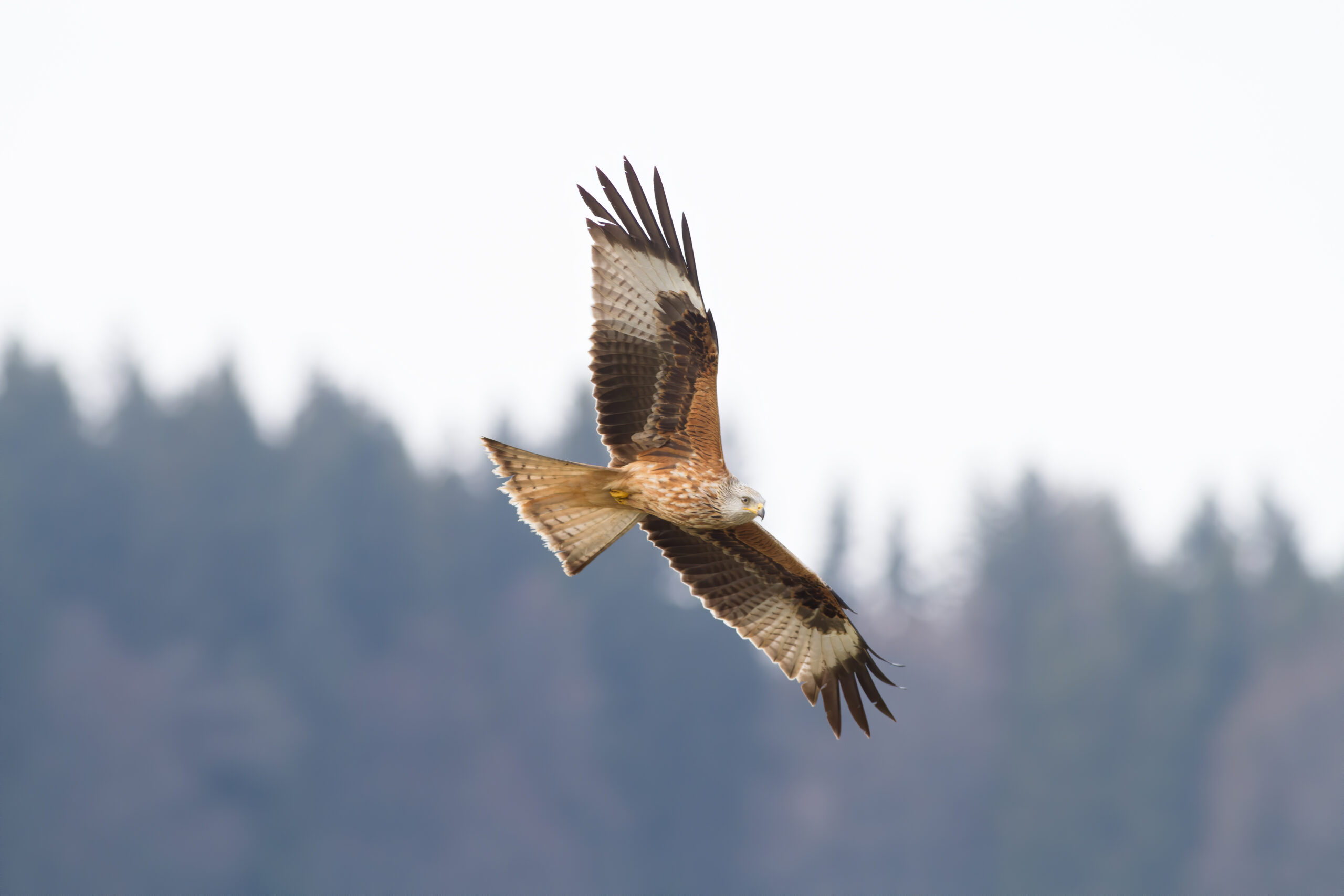
Food availability affects parental anti-predator behaviour in red kites
Résumé
Parental investment theory proposes two non-mutually exclusive hypotheses to explain variation in anti-predator behaviour in relation to the age of offspring: the ‘reproductive value of offspring’ hypothesis and the ‘harm-to-offspring’ hypothesis. The relative contribution of the two factors underlying the hypotheses – reproductive value and harm – may change depending on environmental conditions such as food availability. To test the relative importance of the two hypotheses under different food conditions, we conducted a supplementary feeding experiment in red kite Milvus milvus breeding pairs and used a live eagle owl Bubo bubo as a decoy nest predator to trigger anti-predator behaviour. We used capture probability and time-to-capture in mist nets mounted next to the decoy predator as a proxy for mobbing intensity. Under natural food conditions, we found a nearly constant mobbing intensity throughout the entire nestling period. However, under food-enhanced conditions, mobbing intensity was reduced in parents with young nestlings and increased in parents with old nestlings. These results suggest greater importance of the ‘reproductive value of offspring’ hypothesis in situations of favourable food availability. Moreover, mobbing intensity depended on brood size and weather conditions. The results suggest that parental anti-predator investment is shaped by both offspring vulnerability and offspring reproductive value, with changing contributions in relation to offspring age. Thus, parental predator responses are dynamically adjusted to the current environmental conditions affecting vulnerability and reproductive values of offspring as well as parental predation risks.
Keywords: food supplementation, harm-to-offspring, Milvus milvus, mobbing behaviour, parental investment, reproductive value
Collaboratrices et collaborateurs