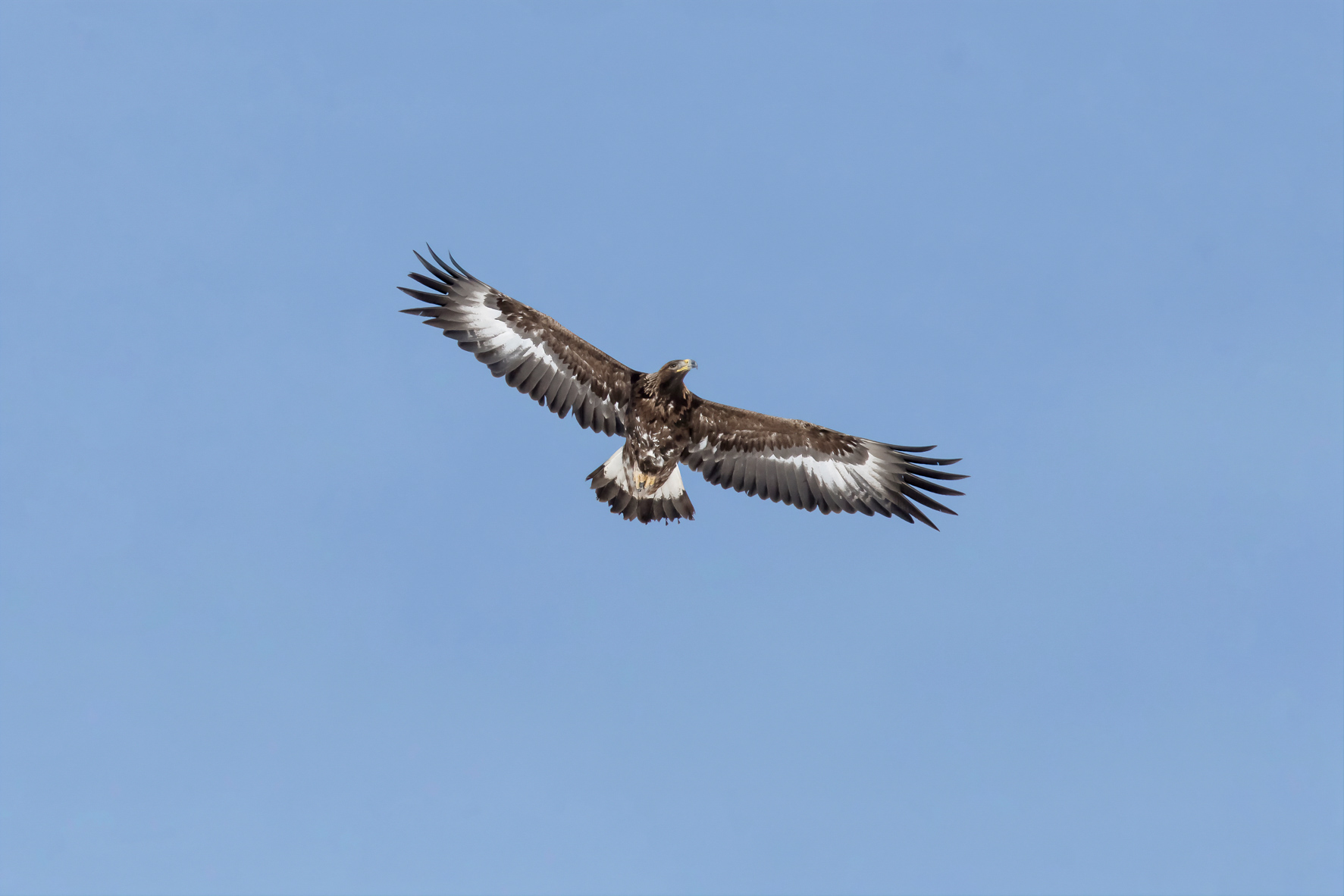
The consequences of food and flight efficiency for the timing of natal dispersal in golden eagles
Résumé
Permanent emigration from the natal range represents one of the most critical life history transitions in an animal’s life and its timing can have long-lasting consequences. While early-life food conditions are known to affect emigration timing, their interplay with the development and expression of movement skills acting on emigration remains poorly understood. Here, we investigated the effects of postfledging flight and feeding behaviour on emigration timing in the Alpine population of the golden eagle, Aquila chrysaetos. We used ground-truthed accelerometer data from falconry golden eagles to train a random forest algorithm. Applying the algorithm to accelerometer bursts of wild birds allowed us to allocate each burst to a behaviour and derive time budgets. Then, we quantified individual-specific developmental rates and individual total frequency of both soaring and flapping flight (energy expenditure) and of feeding behaviour (energy intake) over the early postfledging dependency period and assessed their effect on emigration timing (days since fledging). We found that increased postfledging flight efficiency, characterized by the proportion of total time spent soaring versus flapping, was associated with early emigration but not the developmental rates of flight behaviours. These findings suggest that unmeasured environmental factors or innate activity differences rather than individual differences in flight skill development drive emigration timing. Neither frequent feeding nor nestling body condition was associated with characteristics of flight behaviours. Yet, frequent feeding resulted in early emigration. Despite the strong sexual dimorphism in golden eagles, we only found a difference in time spent flapping between sexes. Together, the results suggest that there might be two environmental factors, favourable food availability and suitable soaring conditions that allow for early emigration. Thus, in addition to food availability, the availability of uplifts in the parental territory facilitating soaring flight may represent a pivotal but underappreciated driver for emigration decisions in juvenile soaring birds.
Collaboratrices et collaborateurs