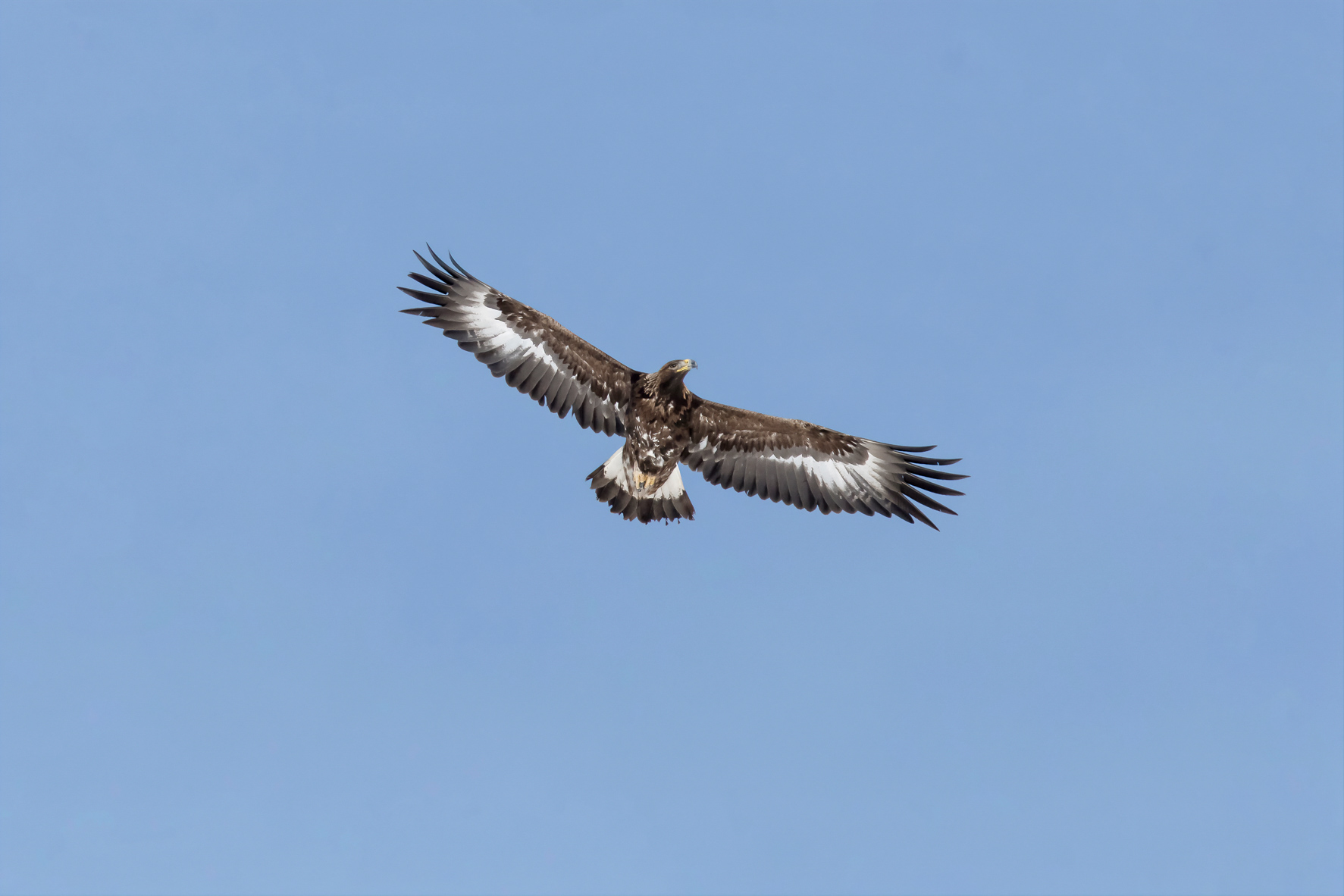
The early life of juvenile golden eagles (Aquila chrysaetos): sex and activity drive fledging time and pre-dispersal exploratory behaviour
Résumé
The nestling and post-fledging dependence period (PFDP) represent a pivotal time in the life-history of young altricial birds. Before gaining independence at the onset of natal dispersal, it is imperative that individuals learn how to survive in a challenging environment. Intrinsic factors and extrinsic conditions as well as individual development and behaviour during the nestling period and PFDP have critical effects on decision-making, fitness, and survival in the future. Yet, the relationships between nestling behaviour, exploratory behaviour during PFDP and the onset of natal dispersal, as well as the factors influencing them, remain largely understudied. We used high-resolution GPS and body-acceleration data of 32 juvenile golden eagles (Aquila chrysaetos) to investigate the links between nestling and PFDP activity (including feeding proportion in specific models), and timing of fledging, exploratory behaviour, as well as timing of emigration. We further tested the influence of intrinsic factors and environmental conditions on activity and feeding proportions of juveniles during the nestling period and PFDP. Higher nestling activity and better body condition were associated with earlier fledging. Higher activity was measured in more northward exposed nests. Moreover, nestlings with higher activity also showed higher activity during PFDP inside the natal territory. A higher number of excursions was associated with higher activity inside the natal territory, but lower activity during excursions. Additionally, we found strong differences between the sexes in both periods: while males fledged earlier than females, females explored more often and for a longer mean duration than males, even though males showed higher activity levels inside the natal territory. The effects of feeding on fledging and exploration remained inconclusive as well as the influence of nestling and post-fledging activity, feeding and exploratory behaviour on the age at emigration. Nevertheless, the results of this study suggest that higher activity levels in the nest reflect faster skill development and perhaps a more proactive personality that have carry-over effects shaping activity and exploratory behaviour during PFDP. While we found no link between personality types and the onset of natal dispersal, they may well become influential during subsequent dispersal phases. Furthermore, we suggest that the sex differences in activity and exploratory behaviour are indicative of early development of dispersal phenotypes that become apparent during subsequent dispersal phases and roles taken on as territorial adults.