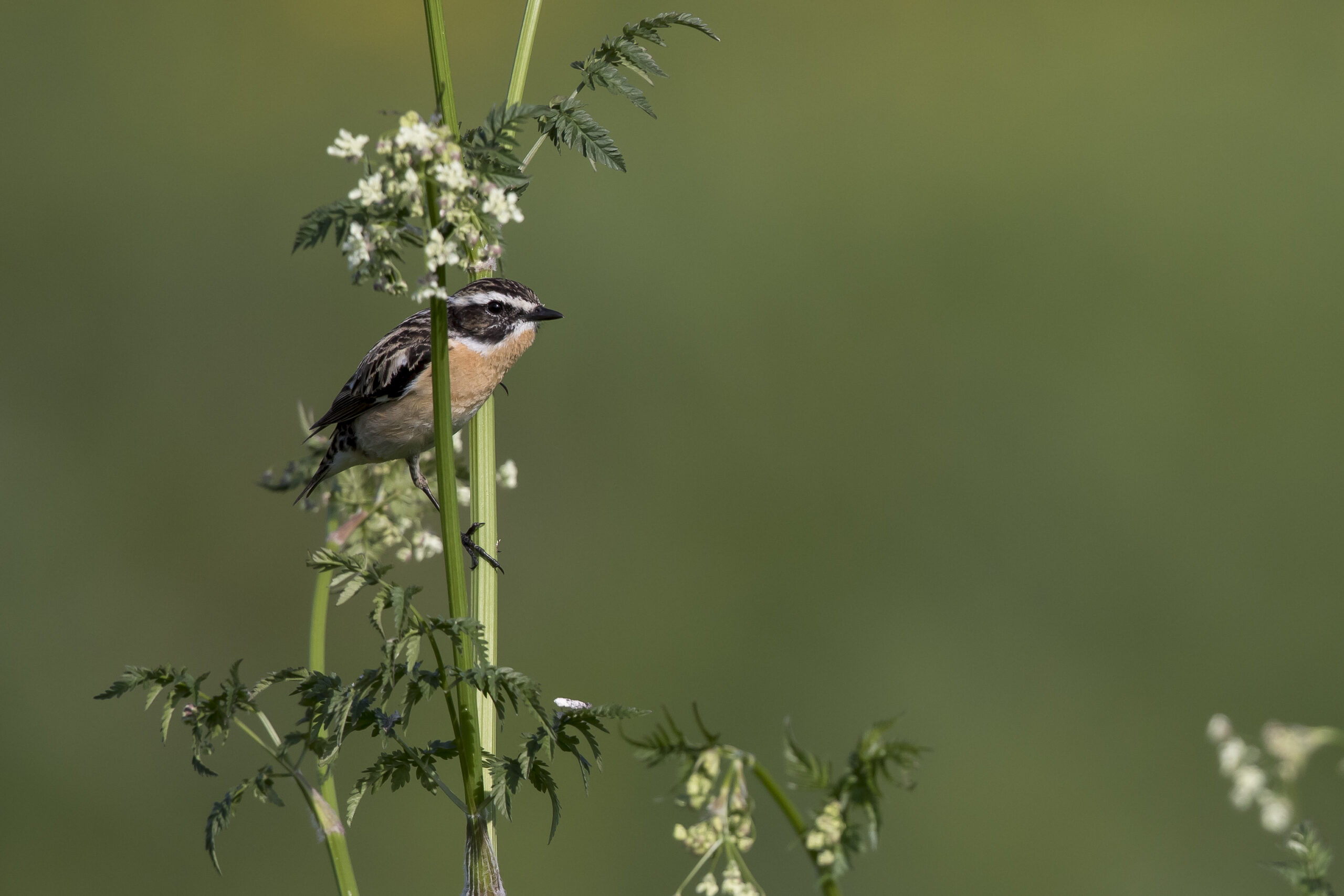
Whinchats impacted by changes in alpine grassland management: research results from Switzerland
Résumé
Research on declining Whinchat populations in the Swiss Alpine region allowed identifying the importance of different factors associated with grassland intensification affecting Whinchat demography. In early stages of grassland intensification direct effects of mowing such as nest destruction and killing females are key factors negatively affecting Whinchat populations, whereas indirect effects of intensification such as reduction in prey availability lag behind and mainly affect settlement decisions years after the start of intensification. Degrading grassland habitats offer a continuous availability of suitable habitats in the moment of settlement. However, these continuous grassland habitats are overlaid by a mosaic of early and late mown fields. Here, we modelled population growth rate of different mowing and landscape scenarios by using population models integrating the current knowledge. The results show that in more intensively cultivated grasslands, population growth is not only affected by the amount of early mown meadows, but also by the exact timing of the early and the late mowing events. While mowing before hatching of the brood introduces female mortality, mowing before fledging of re-nesting attempts prevents their contribution to productivity. In areas where both effects occur, more than 60% of the meadows should be mown late to maintain a viable population. Including the landscape context showed that early mown settling habitats surrounding late mown areas can accelerate population decline considerably and even turn stable source populations to decline. We suggest that understanding the landscape context including dispersal patterns and settlement behaviour will be the main challenge in future Whinchat research and it will be most important for further improving current conservation efforts.
Collaboratrices et collaborateurs