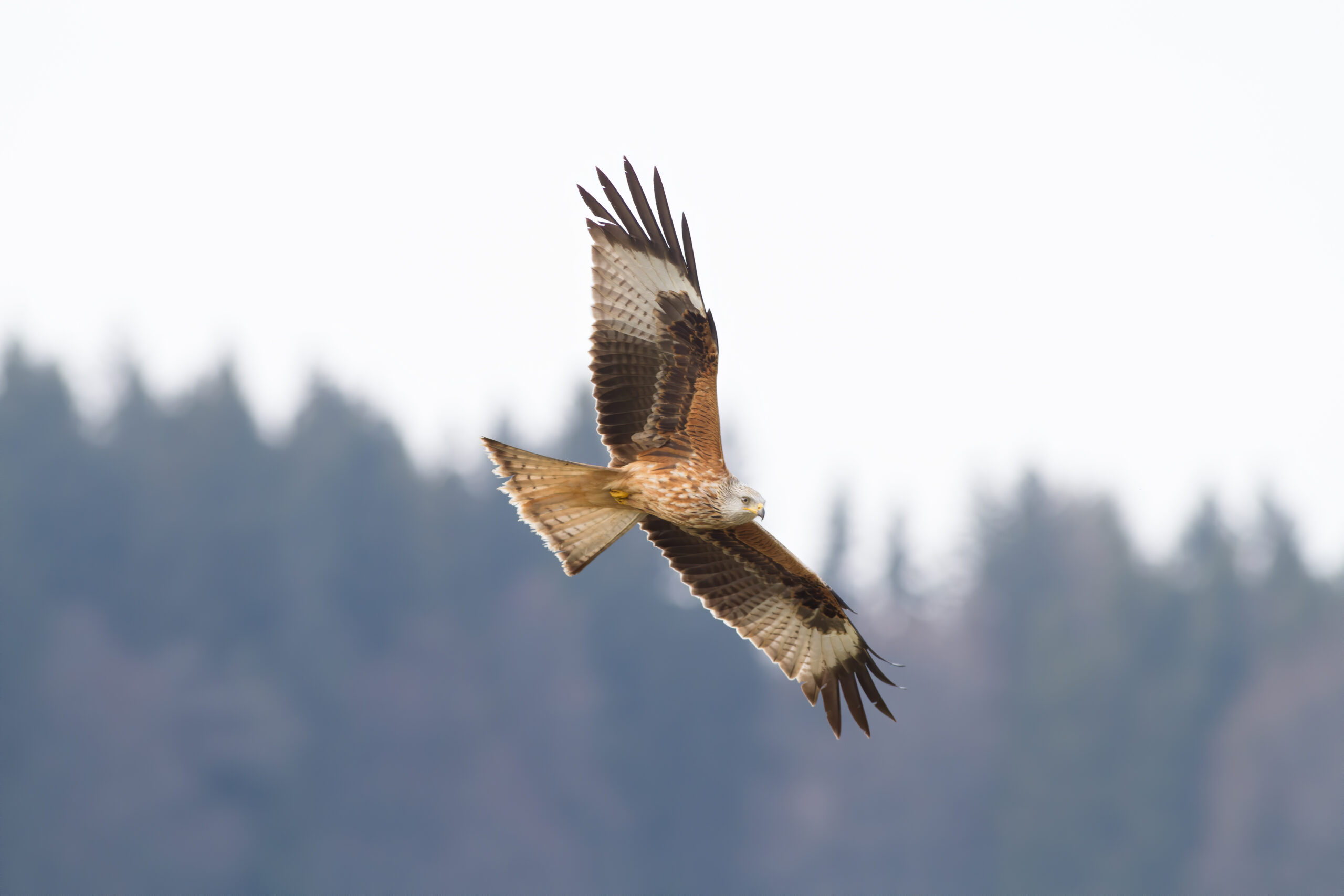

Identifying anthropogenic feeding sites from GPS tracking data: a case study for red kites (Milvus milvus) in western Switzerland
Riepilogo
Today, animal movement data can be used in a remote sensing approach to obtain environmental information and detect human activities. Using the example of red kites (Milvus milvus) in western Switzerland the aim of this thesis was to develop a location-based, data-driven method to identify locations of anthropogenic feeding sites. Anthropogenic feeding of red kites is a rather common habit within the rural and urban population of Switzerland. Survey-based research has located and quantified anthropogenic feeding within a study area in western Switzerland. However, this is a very time-consuming approach, especially for larger geographic areas. The developed individual-based approach combined context variables, kernel density estimation and revisitation analysis in a modelling framework. A key finding is that the methodology works best with data collected on breeding birds. For breeding birds 63% of potentially used anthropogenic feeding sites could be detected, with 60% and 75% detection rates for small and large sites, respectively. Non-breeding bird data, while performing well for large sized anthropogenic feeding sites with a detection rate of 80%, only detected 31% of potentially used anthropogenic feeding sites overall. In conclusion, while it is possible to detect small and large size anthropogenic feeding sites with breeding bird data, data of non-breeding birds only delivers reliable results for large size feeding sites. These findings highlight the behavioural differences of the age classes and indicate that the behaviour of breeding birds is more predictable by repeated visits to a location. In general, the results show how GPS tracking data of individual animals offer a new way to remotely sense environmental information.
Collaboratori