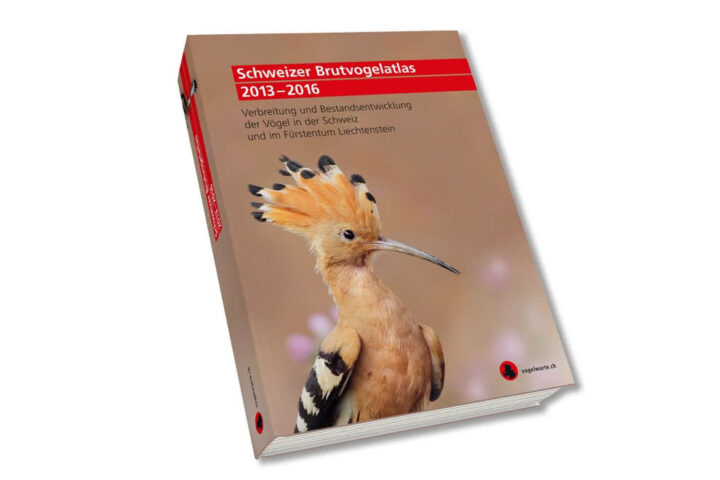
BAFU & BLW (2016): Umweltziele Landwirtschaft. Statusbericht 2016. Umwelt-Wissen Nr. 1633. Bundesamt für Umwelt (BAFU) und Bundesamt für Landwirtschaft (BLW), Bern.
BFS, ARE, DEZA & BAFU (2016): Nachhaltige Entwicklung. Taschenstatistik 2016. Nachhaltige Entwicklung, regionale und internationale Disparitäten 734-1600. Bundesamt für Statistik (BFS), Bundesamt für Raumentwicklung (ARE), Direktion für Entwicklung und Zusammenarbeit (DEZA) und Bundesamt für Umwelt (BAFU), Neuchâtel.
FSO, ARE, SDC & FOEN (2016): Sustainable development. Pocket statistics 2016. Sustainable Development, Regional and International Disparities 737-1600. Federal Statistical Office (FSO), Federal Office for Spatial Development (ARE), Swiss Agency for Development and Cooperation (SDC) and Federal Office for the Environment (FOEN), Neuchâtel.
Magurran, A. E., S. R. Baillie, S. T. Buckland, J. M. Dick, D. A. Elston, E. M. Scott, R. I. Smith, P. J. Somerfield & A. D. Watt (2010): Long-term datasets in biodiversity research and monitoring: assessing change in ecological communities through time. Trend Ecol. Evol. 25: 574–582.
OFEV & OFAG (2016): Objectifs environnementaux pour l’agriculture. Rapport d’état 2016. Connaissance de l’environnement n° 1633. Office fédéral de l’environnement (OFEV) et Office fédéral de l’agriculture (OFAG), Berne.
OFS, ARE, DDC & OFEV (2016): Développement durable. Statistique de poche 2016. Développement durable, disparités régionales et internationales 735-1600. Office fédéral de la statistique (OFS), Office fédéral du développement territorial (ARE), Direction du développement et de la coopération (DDC) et Office fédéral de l’environnement (OFEV), Neuchâtel.
Sattler, T., P. Knaus, H. Schmid & B. Volet (2017a): État de l’avifaune en Suisse. Rapport 2017. Station ornithologique suisse, Sempach.
Sattler, T., P. Knaus, H. Schmid & B. Volet (2017b): Situazione dell’avifauna in Svizzera. Rapporto 2017. Stazione ornitologica svizzera, Sempach.
Sattler, T., P. Knaus, H. Schmid & B. Volet (2017c): The state of birds in Switzerland. Report 2017. Swiss Ornithological Institute, Sempach.
Sattler, T., P. Knaus, H. Schmid & B. Volet (2017d): Zustand der Vogelwelt in der Schweiz. Bericht 2017. Schweizerische Vogelwarte, Sempach.
Spaar, R., R. Ayé, N. Zbinden & U. Rehsteiner (2012a): Elemente für Artenförderungsprogramme Vögel Schweiz – Update 2011. Koordinationsstelle des Rahmenprogramms “Artenförderung Vögel Schweiz”. Schweizer Vogelschutz SVS/BirdLife Schweiz, Zürich, und Schweizerische Vogelwarte, Sempach.
Spaar, R., R. Ayé, N. Zbinden & U. Rehsteiner (2012b): Eléments pour les programmes de conservation des oiseaux en Suisse – Actualisation 2011. Centre de coordination du “Programme de conservation des oiseaux en Suisse”. Association Suisse pour la Protection des Oiseaux ASPO/BirdLife Suisse, Zurich, et Station ornithologique suisse, Sempach.
Sutherland, W. J., A. S. Pullin, P. M. Dolman & T. M. Knight (2004): The need for evidence-based conservation. Trend Ecol. Evol. 19: 305–308.
Turchin, P. (2003): Complex population dynamics: a theoretical/empirical synthesis. Princeton University Press, Princeton.
UST, ARE, DSC & UFAM (2016): Sviluppo sostenibile. Statistica tascabile 2016. Sviluppo sostenibile e disparità regionali e internazionali 736-1600. Ufficio federale di statistica (UST), Ufficio federale dello sviluppo territoriale (ARE), Direzione dello sviluppo e della cooperazione (DSC) e Ufficio federale dell‘ambiente (UFAM), Neuchâtel.
Zbinden, N., H. Schmid, M. Kéry & V. Keller (2005): Swiss Bird Index SBI® – Kombinierte Indices für die Bestandsentwicklung von Artengruppen regelmässig brütender Vogelarten der Schweiz 1990-2004. Ornithol. Beob. 102: 283–291.