FILTER

Filter by
Forecast of bird migration

Predicting bird migration using meteorological data

Most birds migrate at night, invisible from the ground. The number of birds in the air can change a lot from night to night, mostly depending on the weather. Birds avoid flying in rain or strong winds, but when conditions improve, many take off after sunset. Weather forecasts thus tell us how many birds might migrate tonight.

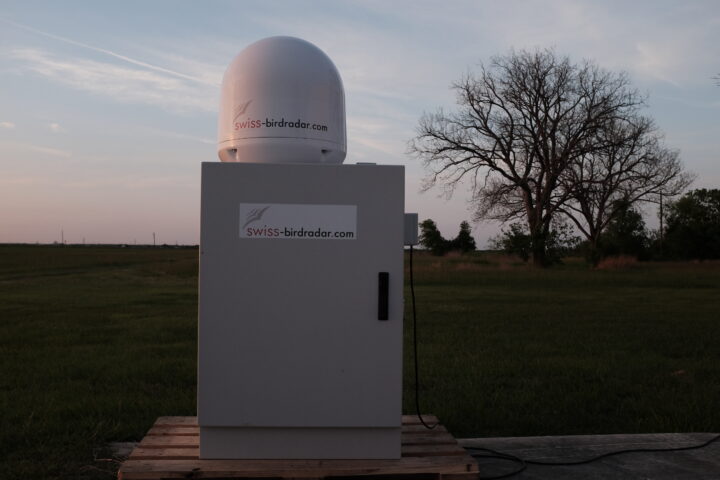
In Sempach, we’ve used radar over several years to study how bird migration is influenced by weather. By combining this data with weather forecasts, we can roughly predict migration activity for the next two nights.

Knowing at what time large numbers of birds are migrating helps to prevent bird strikes —for example, by turning off unnecessary lights at night, which can confuse birds and lead to deadly collisions with buildings.

You can read more about how we count birds with radar here.

Bird Migration Forecast

Two days forecasts and Migration of the last two weeks


The forecast is based on a model by Tom Carrard, in collaboration with Lukas Gudmundsson (ETH Zurich) and Baptiste Schmid. The data is updated daily at 12:00 p.m.


Bird migration history

Preceding 365 days of migration + long-term average


Bird Migration

Radar

The Swiss Ornithological Institute has been investigating bird migration by radar for more than 50 years, addressing both fundamental and applied research questions. The institute continues to be at the forefront in the development of analytical approaches and in the coordination of radar user networks for migration studies. It has also recently expanded its portfolio to study aerial movements of insects and bats. Radar is the only technology that allows recording animal migration at a given site continuously during both day and night over long time periods and across different height intervals.

Learn more

Contact

Research

Bird Migration

We research migratory birds from their breeding grounds to Africa and lay the foundations for their protection beyond national borders.

Learn more