©
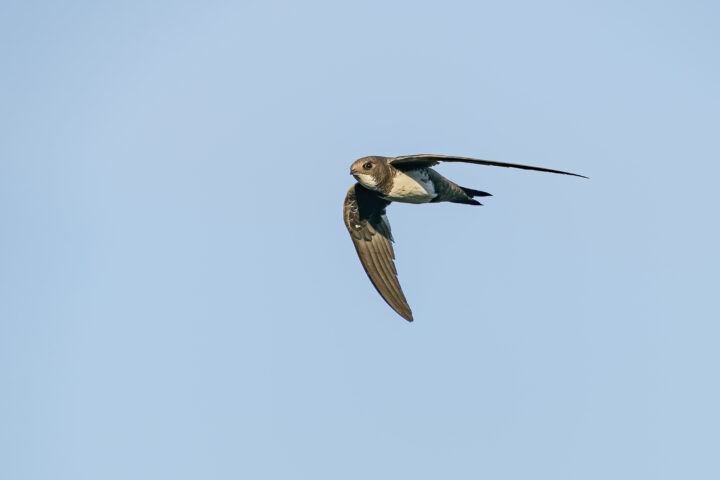
Alpine Swift © Marcel Burkhardt
Geolocators

Light-level and multi-sensor geolocation

Satellite-based Global Positioning Systems (GPS) for tracking migratory birds year-round are still too heavy for most passerines. Therefore, more lightweight alternatives have been developed: light-level and multi-sensor geolocators. Light-level geolocators measure the intensity of ambient light and store this data together with a timestamp in the device’s internal memory. Multi-sensor geolocators, in addition to measuring ambient light, harbour sensors for recording atmospheric pressure, ambient temperature, bird’s acceleration, and intensity of the magnetic field. Once retrieved, these data allow location determination of the bird throughout the annual cycle as well as additional information on the individual’s behavioural patterns, flight performance, and more.

Significance

Before the introduction of geolocators, the knowledge about whereabouts of our songbirds outside the breeding season was very fragmentary. Thanks to geolocators, it is now possible to record the course of migration of individual songbirds in space and time year-round, including their stopover locations, migration routes, non-breeding sites, flight behaviour and altitudes, daily activity patterns, etc.

Aims

Our geolocator-based studies aim at:

  • recording present day natural history information of migration patterns in various species and populations for future record
  • understanding environmental and genetic influences on the temporal and spatial patterns of individual migration behaviour
  • measuring year-round energy expenditure in long- and short-distance migrants
  • linking individual migration patterns and performance with past and future reproductive success (i.e., carry-over effects)
  • evaluating migratory connectivity between breeding and non-breeding areas and its consequences for population dynamics
  • assessing route choice relative to migration barriers
  • investigating migration behaviour in the face of anthropogenic change
  • developing and improving analytical tools for geolocator-based data

Approach

Any geolocator-based study is inherently composed of hardware that is deployed on birds to track their movement, and of software that is subsequently used to analyse the collected data.

Hardware

Software

Partners

  • Bern University of Applied Sciences
  • Simeon Lisovski, Alfred Wegener Institute, Potsdam, Germany
  • Kiran Dhanjal-Adams, Royal Botanic gardens, Kew, Richmond, United Kingdom
  • Silke Bauer, Swiss Federal Institute for Forest, Snow and Landscape Research WSL
  • Steffen Hahn

Financial support

Environmental technology Promotion, Federal Office for the Environment (FOEN)

Project management

*We do not sell geolocators commercially but produce them for own and collaborative work.