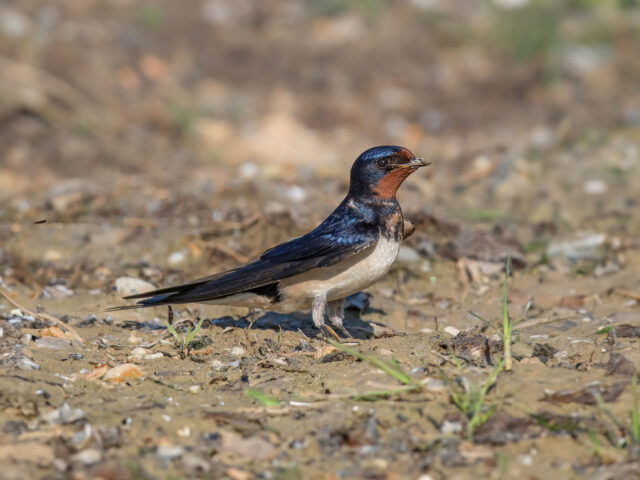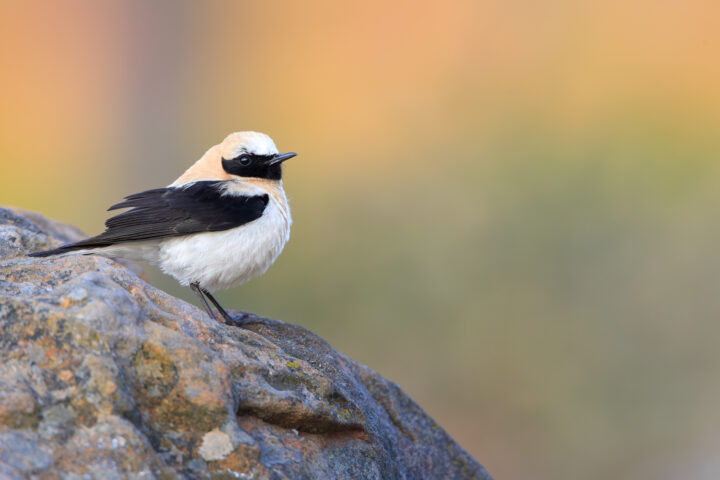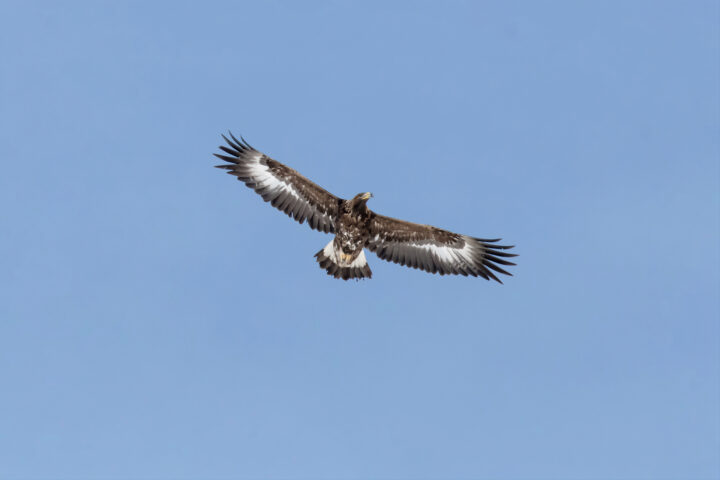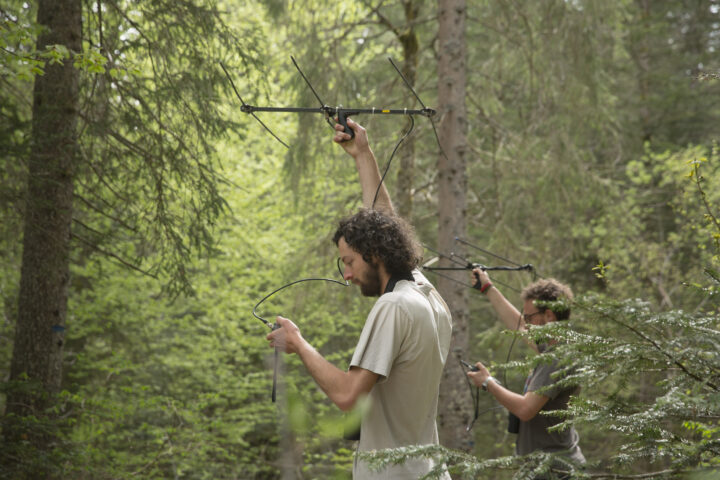


Natal dispersal in birds underpins gene flow, population connectivity, and biodiversity. Yet most stud-ies emphasize total distance between natal and settlement sites, with little focus on the real disper-sal phase when juveniles explore potential settlement habitats. Species characteristics such as flight modes (flapping, soaring) or longevity (short-lived, long-lived) might result in very different patterns of movements during dispersal. By compiling juvenile tracking data worldwide, we aim to investigate the effects of species traits and environmental contexts on prospecting patterns that shape settle-ment decisions of young birds.

©
© Matthias Tschumi

©
©
Valentin Graf

©
©
Patrick Scherler

©
©
Martin Grüebler

©
©
Heidi Schuler
Juvenile little owl with telemetry tag.


Drivers of avian natal dispersal patterns across species
Examining how species traits shape dispersal movements
Domain
Research
Unit
Ecological research
Topics
Ecology, Evolution
Habitat
alpine habitats, farmland, forest, meadows and pastures, rivers & streams, rocky terrain, semi-open farmland, settlements, wasteland, wetlands
Project start
2025
Project status
ongoing
Project management
Martin Grüebler
Project region
Africa, America, Asia, Australia, Europe
Details
Project objectives
Our objectives are to:
- Identify comparable dispersal movement metrics. What movement characteristics at different spatio-temporal scales can be used to investigate intra- and interspecific variation in individual dispersal behaviour.
- Link species traits to behavior: We aim to quantify how morphology, ecology, and life-history of bird species influence these metrics.
Methodology
First, we will compile and standardize juvenile tracking datasets from c. 100 bird species. Second, we will extract standardized dispersal metrics at both the step level and the phase level. Finally, we will integrate these dispersal metrics with species traits (morphology, life history) and the species’ general environmental features (e.g. predictability).
Significance
This global, cross-species synthesis will unite juvenile tracking data from dozens of bird lineages to reveal general and clade-specific dispersal rules and patterns. By comparing dispersal movements across ecological, morphological, and life-history gradients, we will identify the species associated factors that consistently facilitate — or hinder — population connectivity. These insights will inform predictive models of range shifts, guide conservation planning for multiple species, and pinpoint critical corridors that sustain resilient avian communities.
Results
We have already identified a series of published or known data sets on dispersal movements of young birds – and many data owners already agreed to contribute their data and collaborate. The progress of this compiling process can be followed at DispersalDataOverview.
Project partner(s)
- Maria del Mar Delgado
- Many data owners around the world
Employees





Unit
Ecological research
We investigate the diverse interactions of birds with their environment, from individual settlement behaviour to species communities.