


One of the main goals of conservation biology is to understand why some species thrive and others are threatened with extinction. Both social (intraspecific and interspecific density and interactions) and non-social (prey availability, anthropogenic disturbance) environmental factors influence the success of a species, these factors can operate at different temporal and spatial scales, and many of these factors can interact with each other. Here we investigate social density and interactions between barn owls and kestrels in relation to non-social environmental factors throughout the annual cycle to quantify their effects on barn owl fitness parameters.

©
© Schweizerische Vogelwarte
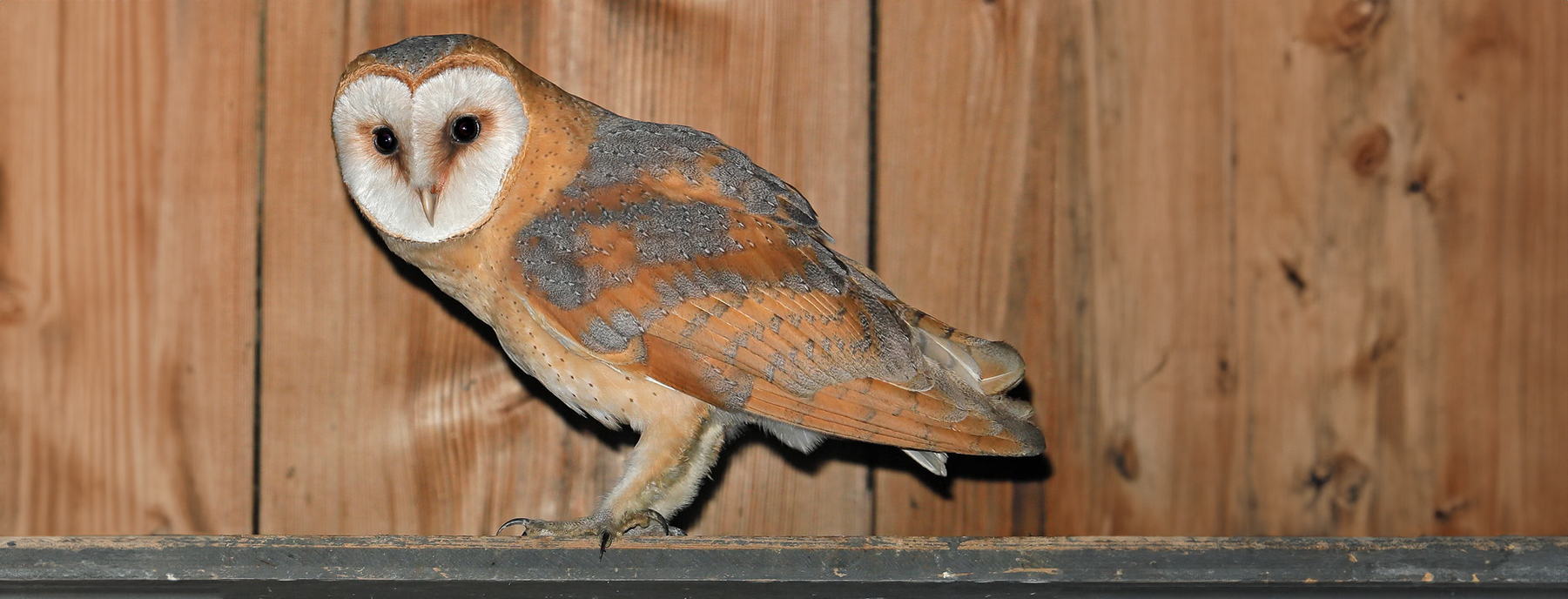
Barn owl perching on one of our ANISCA systems in front of the nest box

©
©
Lukas Linder
Capturing breeding barn owls at their nesting site

©
©
Camera trap picture
Barn owl bringing a prey to ist brood

©
©
Ramon Sager

©
©
Camera trap picture
A kestrel visiting a occupied barn owl nest

©
©
Camera trap picture
Interspecific competition between kestresl and barn owls?

©
©
Camera trap picture

©
©
Camera trap picture
Barn owl male feeding his offsprings

©
©
Camera trap picture
Barn owl bringing a prey to ist brood


©
© Schweizerische Vogelwarte

©
©
Lukas Linder

©
©
Camera trap picture

©
©
Ramon Sager

©
©
Camera trap picture

©
©
Camera trap picture

©
©
Camera trap picture

©
©
Camera trap picture

©
©
Camera trap picture
Barn owl perching on one of our ANISCA systems in front of the nest box
Capturing breeding barn owls at their nesting site
Barn owl bringing a prey to ist brood
A kestrel visiting a occupied barn owl nest
Interspecific competition between kestresl and barn owls?
Barn owl male feeding his offsprings
Barn owl bringing a prey to ist brood
Effects of social and non-social environmental factors on barn owl fitness
Towards an understanding of social interactions and habitat quality on breeding success and survival of barn owls
Domain
Research
Unit
Anthropogenic influences
Topics
Ecology, Evolution
Habitat
farmland, meadows and pastures
Project start
2022
Project status
ongoing
Project management
Bettina Almasi
Project region
Bern, Fribourg, Vaud
Details
Project objectives
This study will provide new insights into the effects of social and non-social environments on recruitment, reproduction and survival of a critically endangered bird species, the barn owl (Tyto alba), at different temporal and spatial scales. Analysis at the population level should then make it possible to identify the key factors in the persistence of populations of this species, on the basis of which appropriate conservation measures can be proposed.
Methodology
To collect data throughout the barn owl’s annual cycle, we have worked with engineers at Octanis to develop an RFID based system. The system consists of a perch mounted next to the nest box entrance that automatically records the presence of individuals in the nest box and their body weight at each landing throughout the year. Thanks to the ANISCA system, we now have information on which nest boxes the owls visit, how much social interaction takes place at the nest, and data on body weight variation over the annual cycle.
Significance
The barn owl is one of the 50 priority species of the Swiss Species Recovery Programme and a typical species of open agricultural landscapes with high biodiversity. We will gain new insights into how inter and intra specific density, social interactions, prey availability and anthropogenic disturbance interact to influence fitness, and which periods of the annual life cycle are most critical, providing invaluable information for implementing evidence based management and conservation plans for this near threatened bird species in Switzerland.
Project partner(s)
Financial support
- Stiftung Yvonne Jacob
- Swiss National Science Foundation
Employees



Species concerned


Unit
Anthropogenic influences
We want to understand how human influences affect the well-being, behaviour and individual fitness of birds.


