


Environmental conditions affect both individuals and populations. In particular, conditions during winter, when food scarcity is often compounded by increased energy expenditure due to cold, can have direct effects on survival as well as indirect effects on reproductive success in the next breeding season. In this project we investigate how environmental factors (habitat composition, food supply, weather) and intrinsic factors (experience, body condition, stress hormones) affect reproductive success, resource selection and adult survival, as well as dispersal behaviour and juvenile survival.

©
© Roman Bühler

©
©
Camera Trap

©
©
Roman Bühler

©
©
Ramon Sager

©
©
Ramon Sager
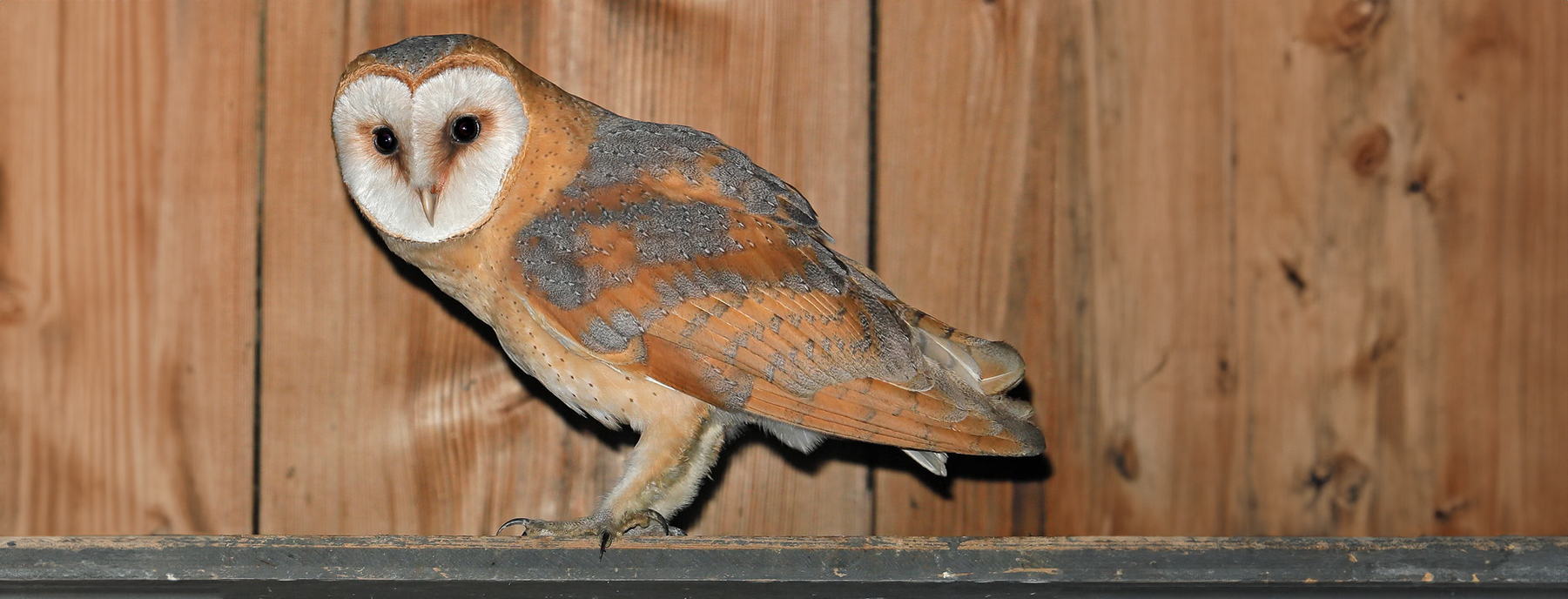
Western Barn Owl
Barn owl, which uses one of the provided perches for hunting
Breeding female barn owl
Juvenile barn owl roosting in a tree
Reddish-brown barn owl roosting in a tree


Habitat selection, breeding performance and dispersal of barn owls
Insights into the hidden life of a nocturnal resident bird
Domain
Research
Unit
Anthropogenic influences
Topics
Distribution Ecology, Ecology, Evolution, Species Recovery
Habitat
farmland, meadows and pastures
Project start
2015
Project status
ongoing
Project management
Bettina Almasi
Project region
Bern, Fribourg, Vaud
Details
Project objectives
In this project we are investigating key ecological factors that limit the individual performance and population development of barn owls throughout the annual cycle. The focus is on the effects of seasonal changes in prey availability, which is strongly influenced by agricultural management, on habitat selection, reproductive performance, adult survival and juvenile dispersal and survival. In addition to providing new insights into the ecology of barn owls, the research aims to secure and improve the protection of the barn owl as an inhabitant of the agricultural landscape.
Methodology
We use tracking devices to follow the movements of barn owls through the annual cycle. At the same time, we assess the activity and abundance of prey (small mammals) in different habitats of the agricultural landscape. By combining information on individual performance (body condition, stress hormones, reproductive output), habitat use, landscape composition and prey availability, we are investigating the influence of environmental conditions on the behaviour, survival and reproduction of barn owls.
Significance
The barn owl is one of 50 priority species of the Swiss Species Recovery Programme. It is a typical species of open agricultural landscapes with high biodiversity. To understand the population dynamic and ecology of barn owls, we need information on its habitat requirements and performance at all life stages and throughout the annual cycle. The investigation of key ecological aspects provides crucial information to improve conservation measures for barn owls.
Results
Prey availability decreases over the course of the annual cycle and shifts from a wide distribution in agricultural fields to permanent cultures in winter, highlighting the importance of biodiversity structures (hedgerows, wildflower strips, extensive meadows) for the survival and reproductive success of barn owls.
Project partner(s)
Employees





Species concerned

Unit
Anthropogenic influences
We want to understand how human influences affect the well-being, behaviour and individual fitness of birds.


