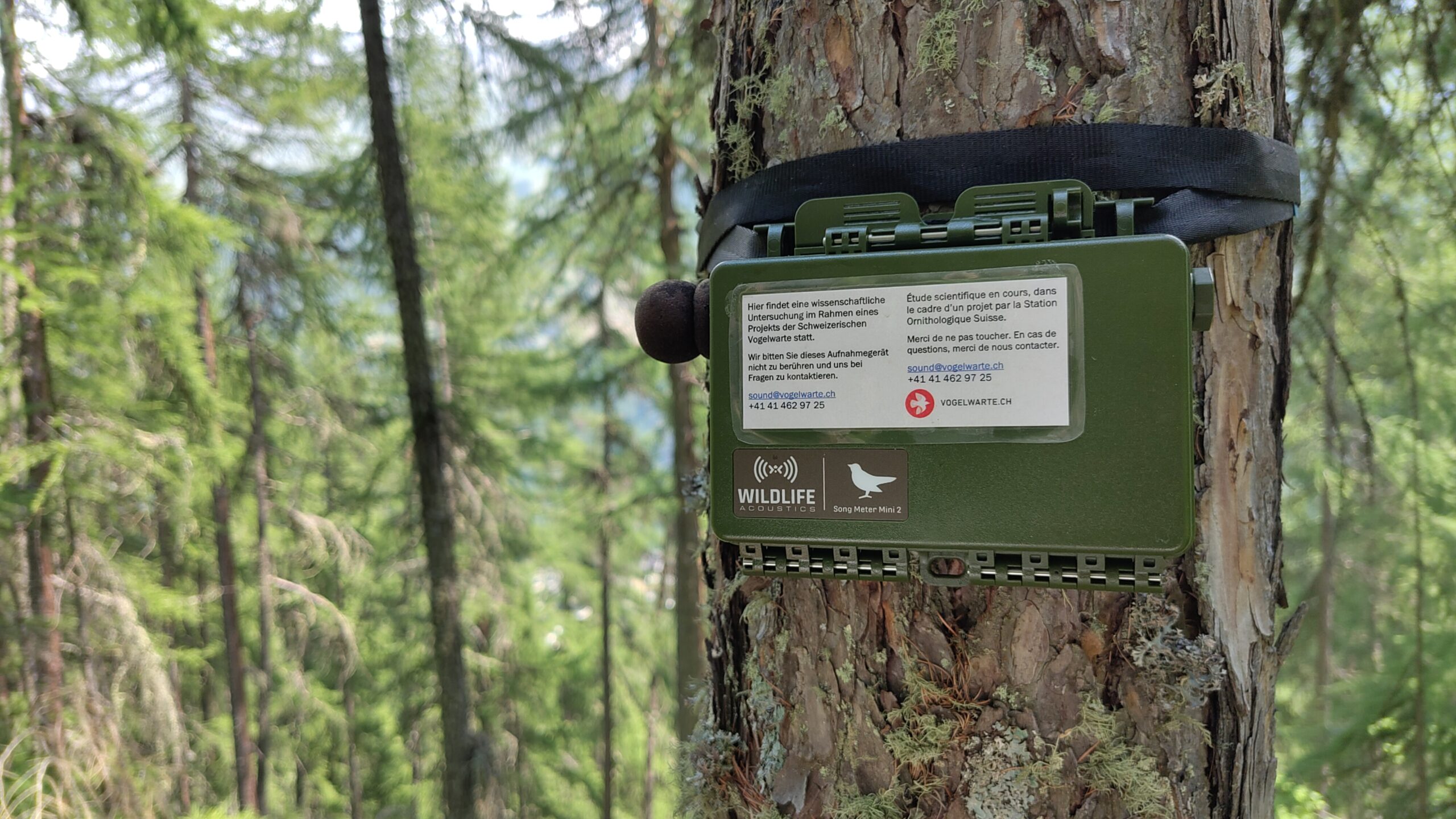

Investigating vocal phenology of Rock Ptarmigan using passive acoustic monitoring
Abstract
Climate and land-use changes are major threats for mountain biodiversity as they often degrade and fragment sensitive habitats. They affect abundance of numerous species and cause shift of their distribution towards mountaintops. Monitoring these species is crucial to follow populations trends but the challenging nature of alpine environment makes it difficult to have high quality monitoring programs. To overcome this challenge, we tested passive acoustic monitoring coupled with the use of automated call recognition on a cryptic high mountain bird species, the Rock Ptarmigan (Lagopus muta). We investigated daily and seasonal call phenology which are key elements for the planification of conventional count of the species, carried out once a year in Switzerland. Rock Ptarmigan was vocally active from March to July, but activity peaked between mid-March and late April. Males called more frequently 30 min preceding dawn and until its beginning. Vocal activity was highly dependent on daily weather and snow conditions, showing the plasticity of vocal activity phenology for the species. In the two studied years, peak of vocal activity occurred when temperature deviated positively from the mean but when snow depth and snow cover was still important. Our results provide new temporal and climatic guidelines that will help improving the efficiency of conventional count in the Swiss Alps.
keywords: Lagopus muta, Wildlife monitoring, Vocal behavior, seasonal and daily patterns, Grouse, BirdNET, Autonomous recorders, phenology
Employees