


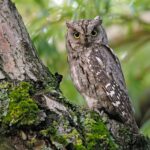
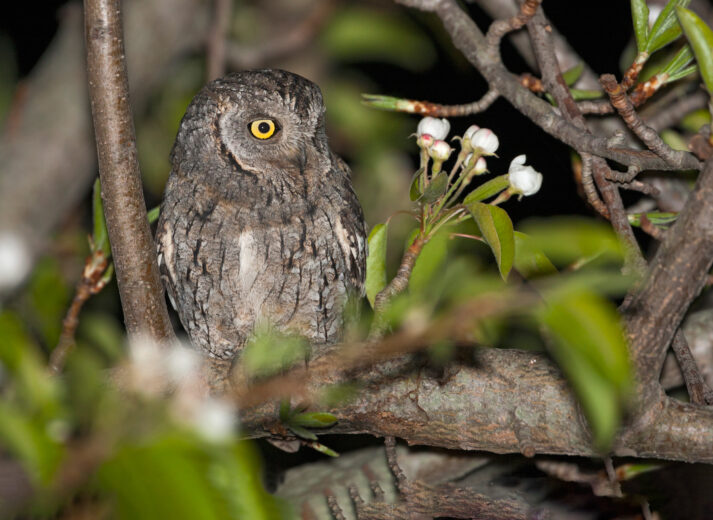
The Eurasian Scops Owl is a small owl with cryptic plumage and an unmistakable call. It inhabits structurally diverse and insect-rich extensively managed agricultural areas, such as traditional orchards or extensively managed low-nutrient meadows with hedges and individual trees. As a cavity-nesting bird, it nests in old trees, but will also use nesting aids. Its diet consists mainly of grasshoppers.
In the early 2000s, the species was almost extinct in Switzerland, but it is now slowly returning to areas it inhabited formerly as well as colonising new ones. It is principally found in warmer regions such as Valais and Ticino.
Conservation of the Eurasian Scops Owl can be promoted by preserving extensively managed low-nutrient meadows, leaving strips of grass unmown, preserving hollow trees and installing nesting aids.
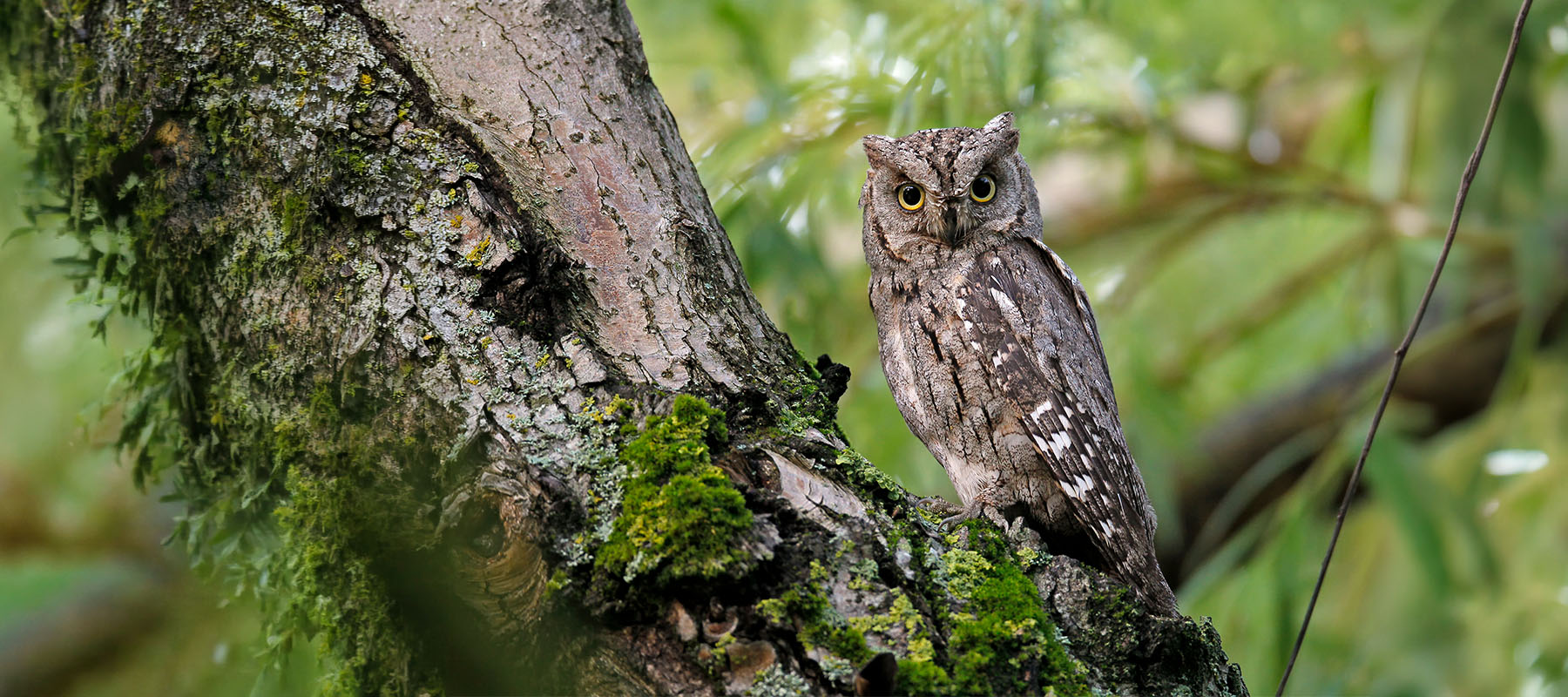
©
© Ruedi Aeschlimann
Conservation programme for birds in Switzerland - Priority species
Eurasian Scops Owl
Distribution and development
Schematic distribution
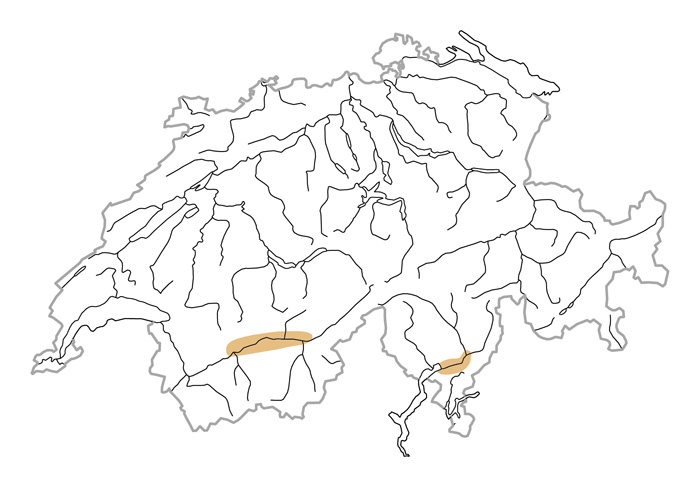
Schematic distribution during the breeding season (ochre), in winter time (dotted in blue) or during migration periods (dotted in vinaceous).
Breeding bird index
The graph shows the relative evolution of the breeding population in Switzerland (100 = mean value). Example: A value of 130 means that the population in the corresponding year was 30% above the mean value of the entire period considered.
Habitat and food
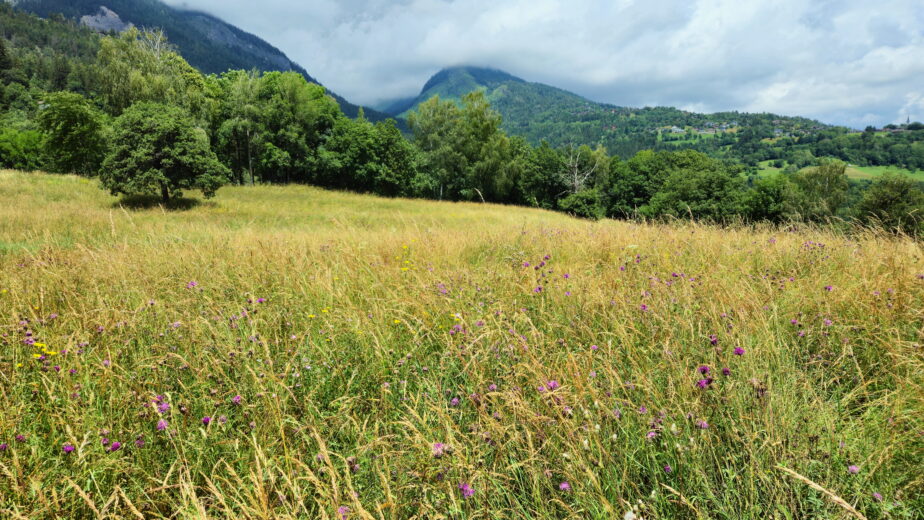
©
© Jean-Nicolas Pradervand
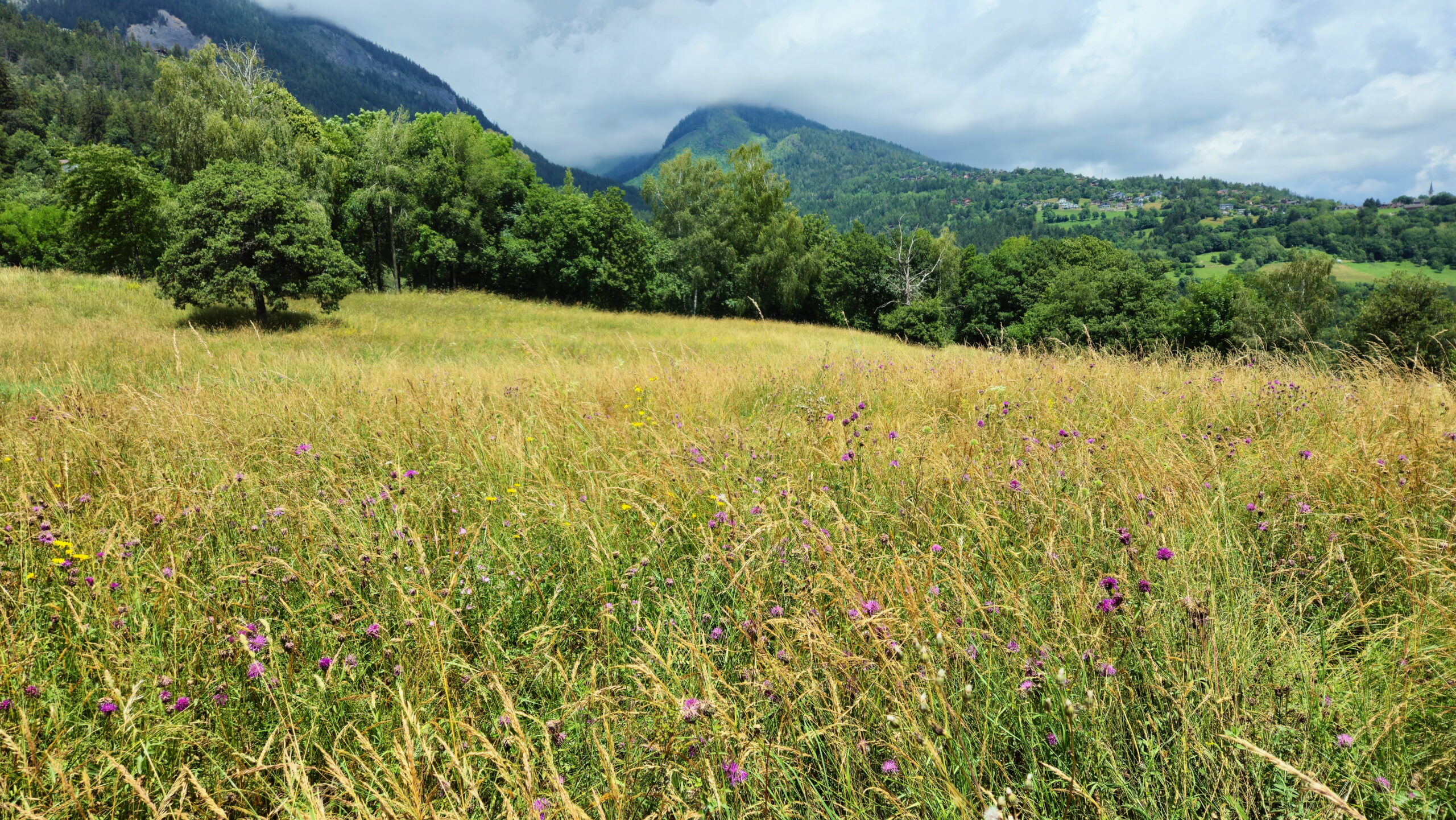
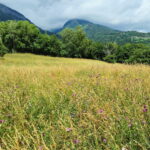
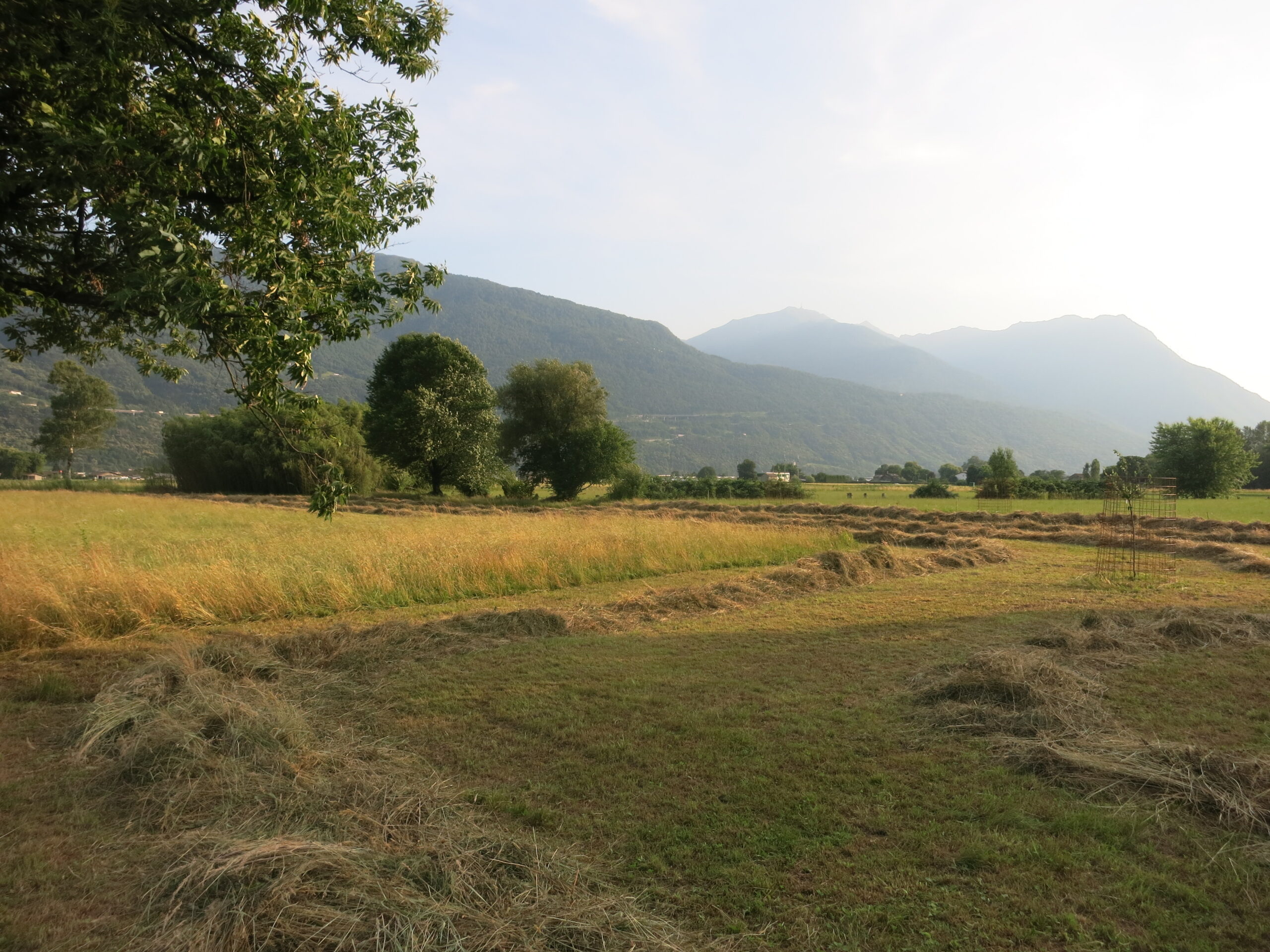
Meadows rich in flowers and insects are very important for the Eurasian Scops Owl (Savièse VS, 2024).
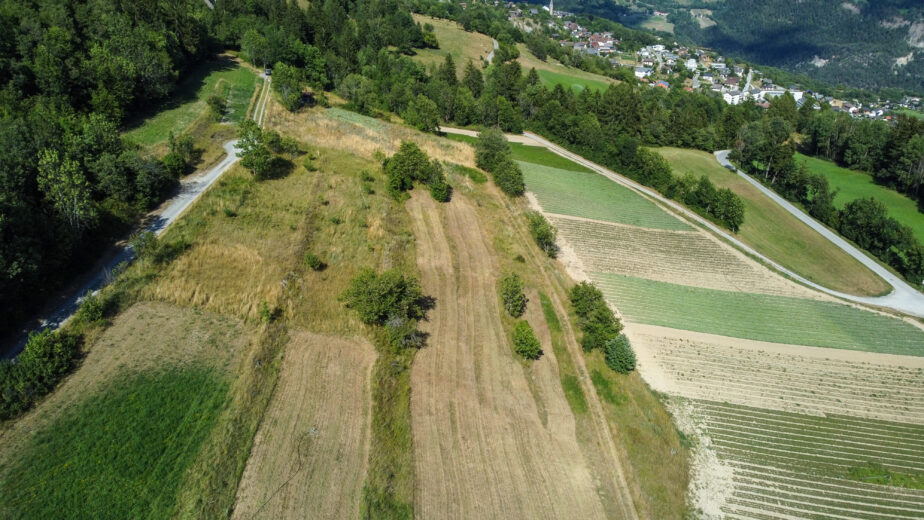
©
© Jean-Nicolas Pradervand
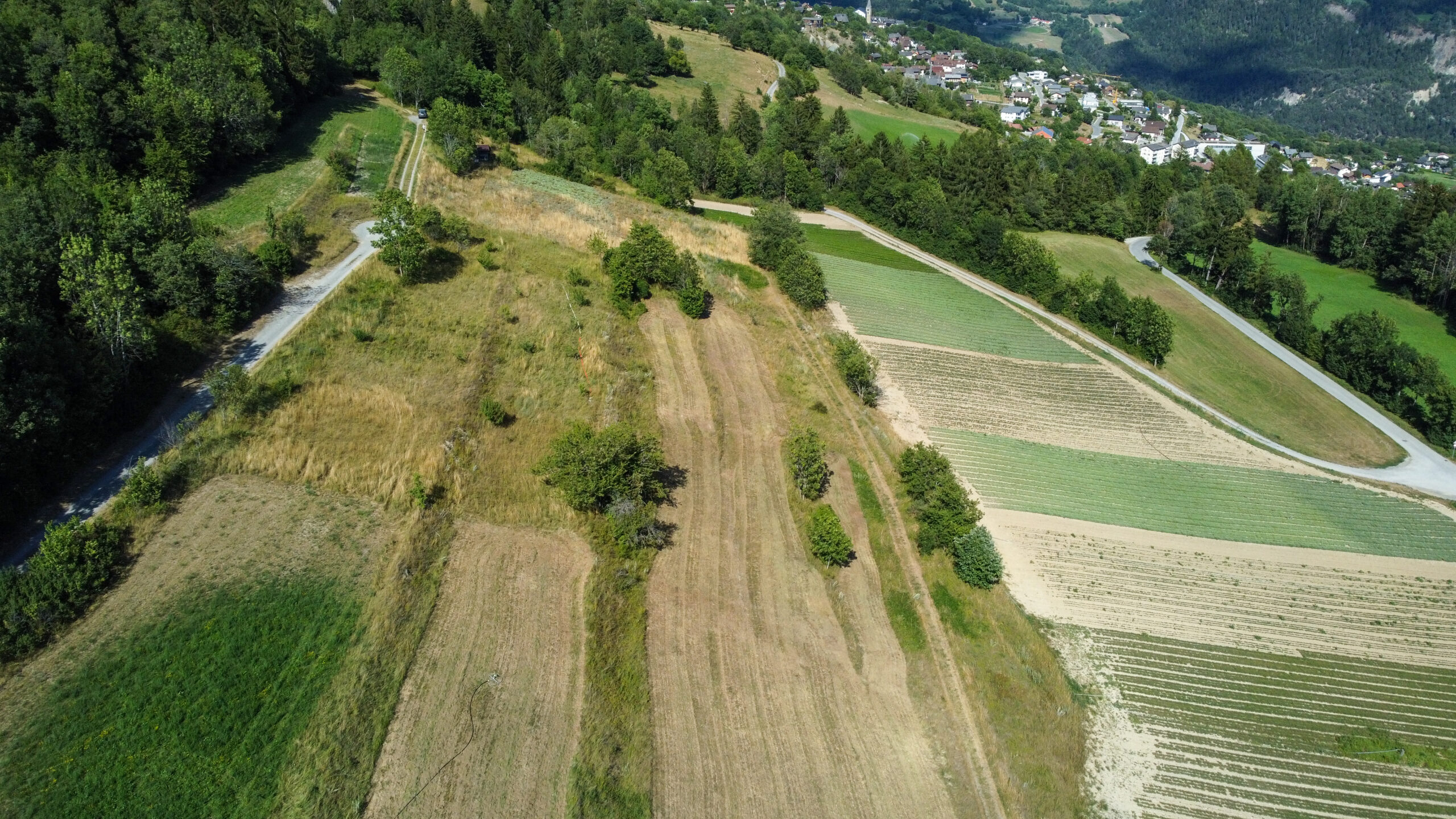
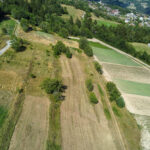
Example of mowing where strips of grass have been left standing in order to encourage insects (Savièse VS, 2023).
©
© Eric Vimercati
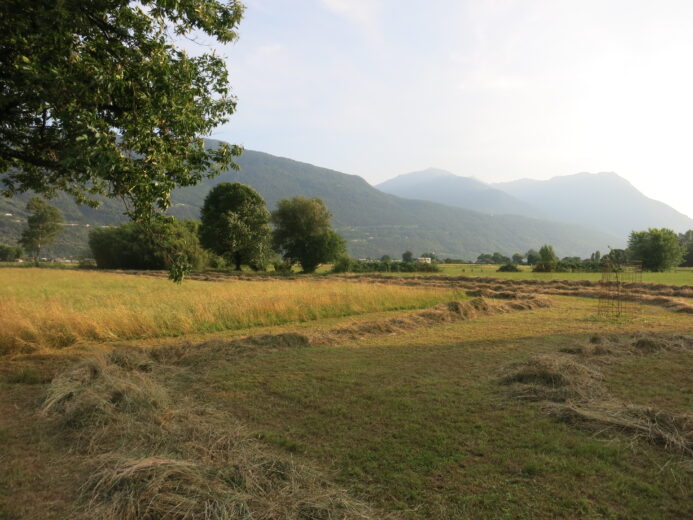
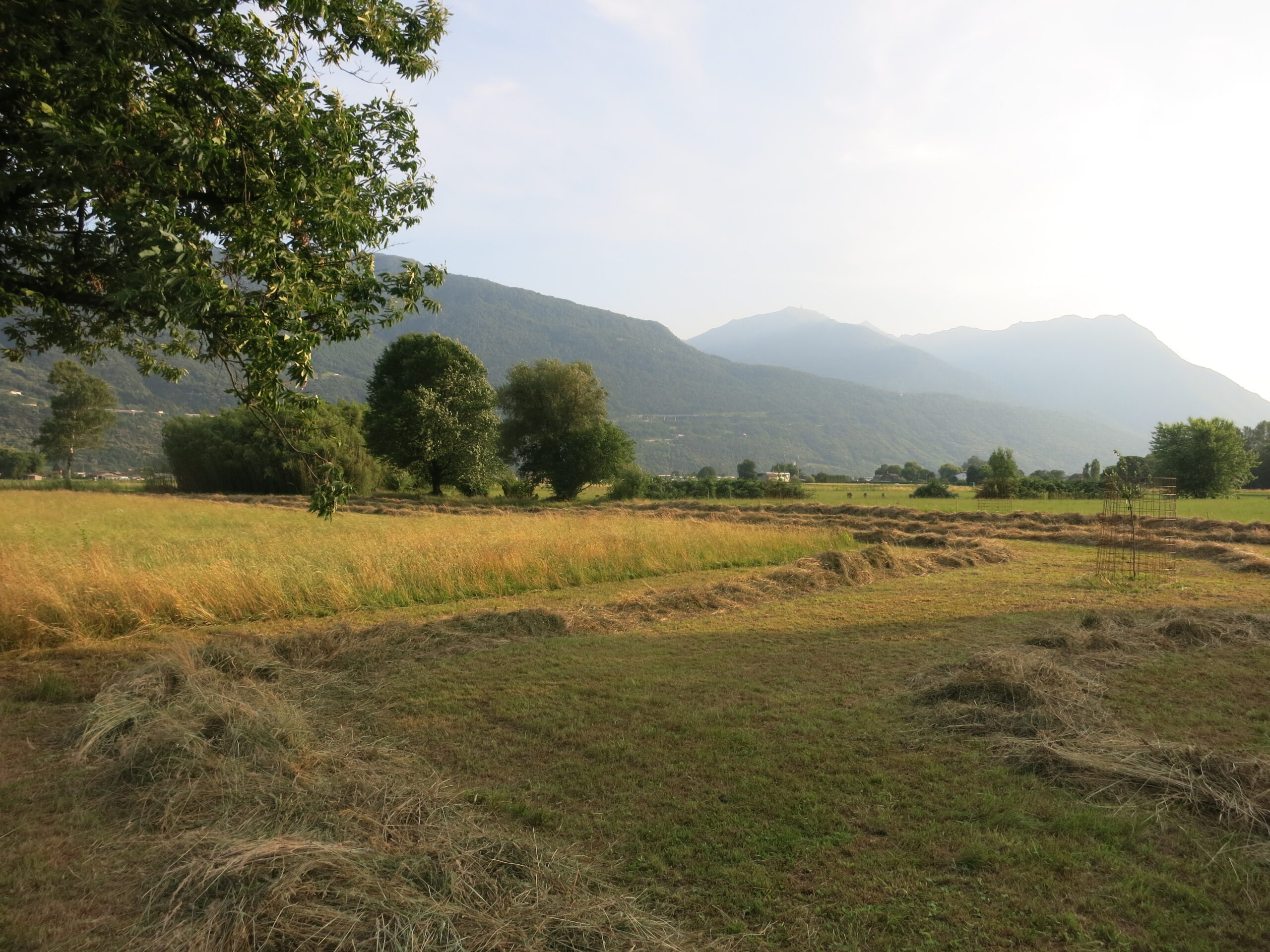
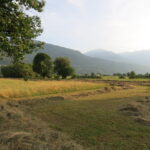
Extensively managed meadow with mosaic mowing.
©
© Jean-Nicolas Pradervand
Meadows rich in flowers and insects are very important for the Eurasian Scops Owl (Savièse VS, 2024).
©
© Jean-Nicolas Pradervand
Example of mowing where strips of grass have been left standing in order to encourage insects (Savièse VS, 2023).
©
© Eric Vimercati
Extensively managed meadow with mosaic mowing.
Conservation programme for birds in Switzerland - Priority species
Eurasian Scops Owl
The Eurasian Scops Owl is a small owl with cryptic plumage and an unmistakable call. It inhabits structurally diverse and insect-rich extensively managed agricultural areas, such as traditional orchards or extensively managed low-nutrient meadows with hedges and individual trees. As a cavity-nesting bird, it nests in old trees, but will also use nesting aids. Its diet consists mainly of grasshoppers.
In the early 2000s, the species was almost extinct in Switzerland, but it is now slowly returning to areas it inhabited formerly as well as colonising new ones. It is principally found in warmer regions such as Valais and Ticino.
Conservation of the Eurasian Scops Owl can be promoted by preserving extensively managed low-nutrient meadows, leaving strips of grass unmown, preserving hollow trees and installing nesting aids.
In the early 2000s, the species was almost extinct in Switzerland, but it is now slowly returning to areas it inhabited formerly as well as colonising new ones. It is principally found in warmer regions such as Valais and Ticino.
Conservation of the Eurasian Scops Owl can be promoted by preserving extensively managed low-nutrient meadows, leaving strips of grass unmown, preserving hollow trees and installing nesting aids.
Birds of Switzerland
Eurasian Scops Owl
To the species profile in the bird database
Project managers


Threats, activities and forecasts
Limiting factors and threats
The intensive management of farmland and the associated dearth of structures such as hollow trees and hedges, the use of pesticides and the irrigation of hay meadows are leading to a decrease in the density and diversity of insects and to a shortage of nesting opportunities.
Breeding season
- Lack of nesting sites (shortage of isolated mature trees).
- Low insect density (mainly grasshoppers).
- Human disturbance, especially during the mating season.
Migration/ Winter
- The birds pass through areas where they are still actively hunted and caught with nets.
- Desertification in the Sahel belt due to global warming and overexploitation of soils is likely to be a problem in the wintering grounds.
Necessary activities
Monitoring
- Annual monitoring of callers and breeding pairs in Valais and Ticino to record the population.
- Monitoring of the Eurasian Scops Owl should be carried out between 20 April and 10 May, as calling activity decreases sharply after that.
Conservation
- Promoting the extensive use of agricultural land.
- Conserving the structural make-up of the landscape by planting hedges, individual trees and standard trees.
- Promoting insect diversity, e.g. by leaving grass strips unmown.
- Installing nesting aids.
- Raising awareness about disturbing nesting avifauna.
Research
- Determination of the density of insects, especially grasshoppers.
- Assessment of possible differences to explain the different population trends in the distribution areas in Valais and Ticino.
- Research on the size and use of hunting territories.
Prospects for success and prognostics
- The species is benefiting from ongoing climate change.
- The trend in Valais raises hopes of a further increase in the population, while the future of the population in Ticino is more uncertain, as its small size makes it more susceptible to random fluctuations.
- The ongoing intensification of agriculture at intermediate elevations, due in part to increased irrigation of hay meadows but also to the expansion of urban areas, presents a risk.
Conservation measures and stakeholders
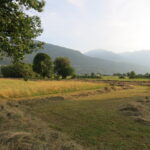
Create ecological compensation areas
Wildflower strips, field margins and extensively managed staggered-use or late-use meadows and pastures provide an adequate supply of food.
Agriculture
Nature conservation
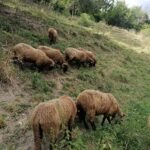
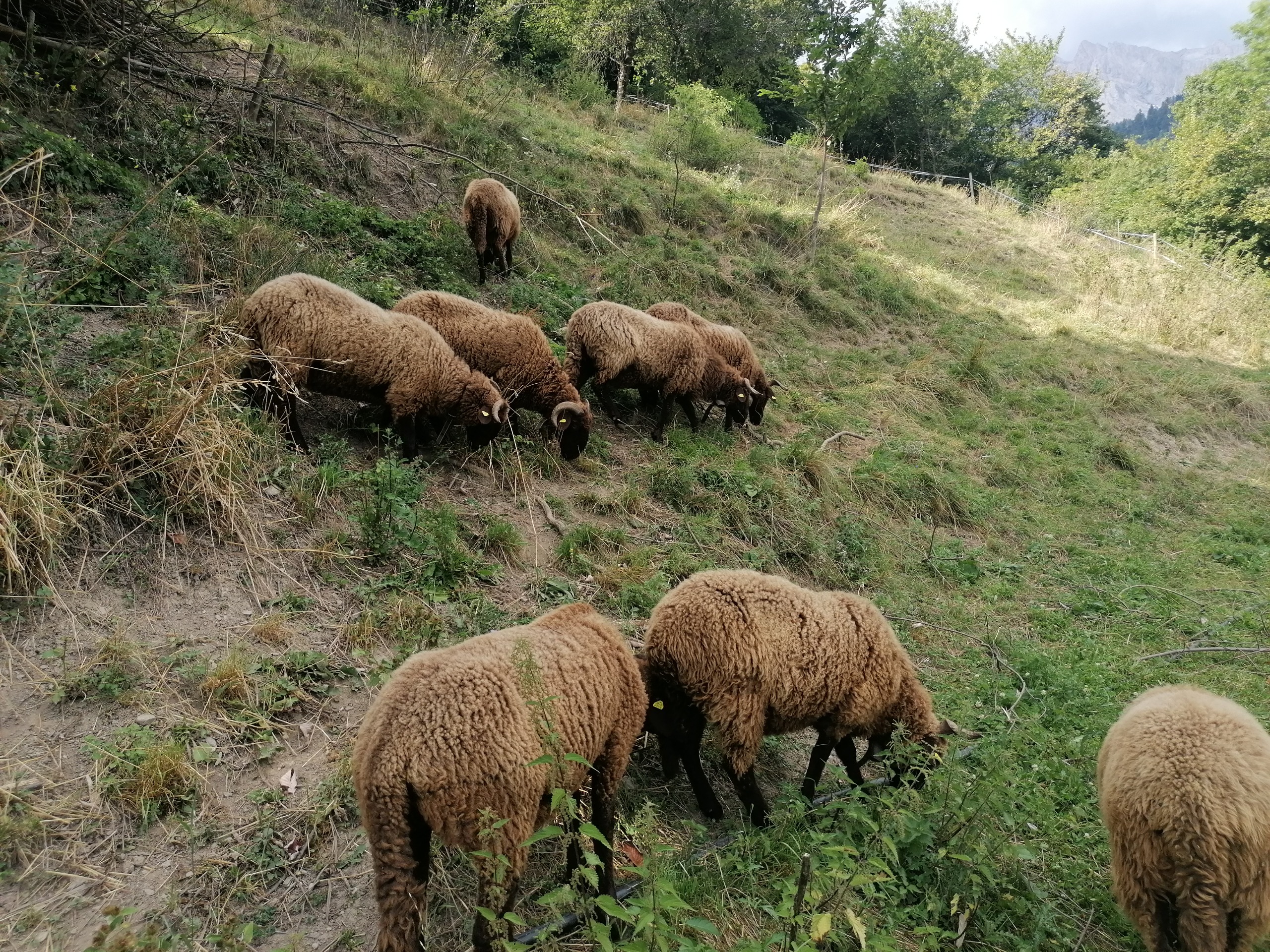
Promote extensive grazing
Extensive grazing promotes species- and structure-rich vegetation.
Show more
Agriculture
Nature conservation
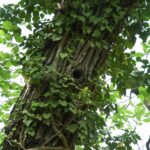
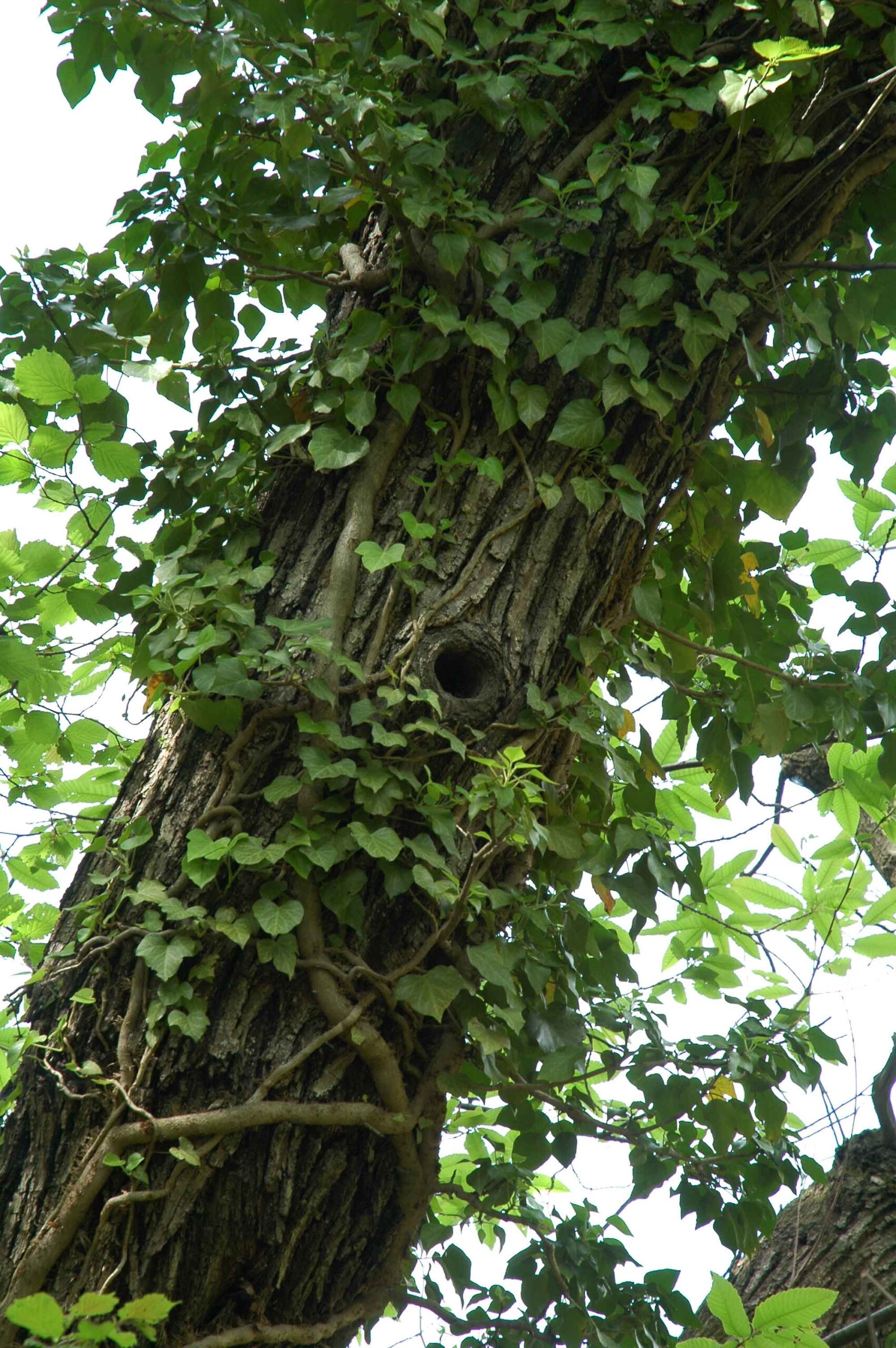
Preserve cavity trees
Hollow trees provide nesting opportunities for a wide variety of bird species in addition to the Eurasian Scops Owl.
Cantons
Forestry
Municipalities
Nature conservation
Parcs
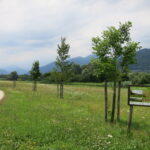
Preserve/promote traditional orchards
High-stem orchards on extensive meadows, pastures and other types of ground-cover are an important habitat for many bird species.
Show more
Agriculture
Municipalities
Nature conservation
Parcs
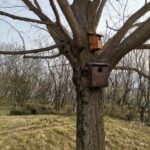
Offer and maintain nesting aids
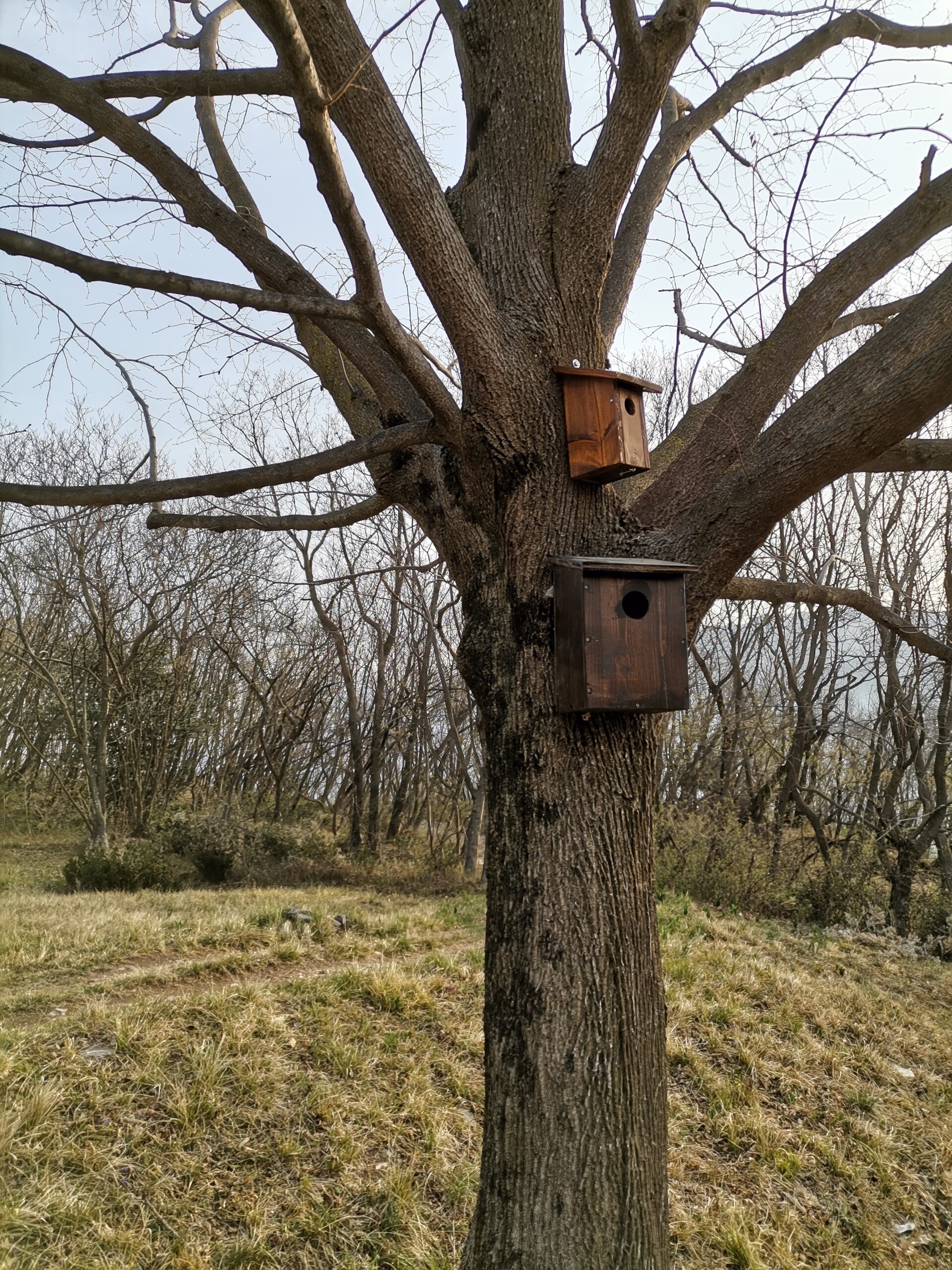
The installation and maintenance of nest boxes compensates for the lack of natural nesting opportunities.
Agriculture
Nature conservation
Parcs

©
© Ruedi Aeschlimann
Birds of Switzerland
Eurasian Scops Owl
In the south, the monotonous, flute-like song of the Scops Owl can be heard in many places, including campsites and city parks. In Switzerland, this heat-loving species is mainly found in the southern parts of the country, where it brings back memories of holidays in the Mediterranean. However, it is rarely seen: thanks to its bark-coloured plumage, it is perfectly camouflaged during...
To the species profile in the bird database


