FILTER

Filter by
©

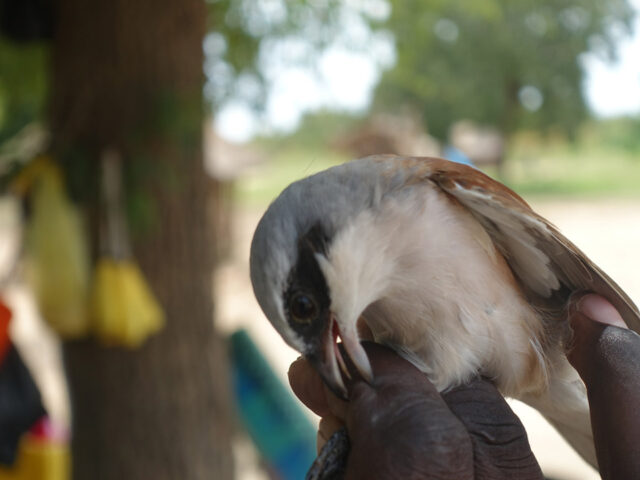
Willow Warbler (Phylloscopus trochilus) caught in West Africa during its non-breeding season

© Crinan Jarrett Crinan Jarrett
Diet metabarcoding

Achieving high resolution information on bird diets through DNA analyses

Diet metabarcoding is a powerful tool that enables researchers to study bird diets in depth. Starting off from bird droppings (called faecal samples) collected in the field, we move to the laboratory. There, we extract and analyse DNA of the food that the bird had eaten earlier, and that is still identifiable after digestion. After several processing steps in the laboratory, these DNA sequences from faecal samples are then matched to a large library of known sequences from food items, such as insects, spiders and plants. The result from our analysis is a list of the species consumed by each bird. This way, diet metabarcoding provides high-resolution data on what foods birds are eating, which can contribute to questions about species’ habitat needs, potential threats, ecology and conservation.

Significance

It can be very difficult to observe bird diets in the wild. Birds often move around rapidly consuming small food items (e.g., insects), making direct observations hard. Diet metabarcoding provides an opportunity to understand what birds are eating in the wild, in a non-invasive and high-resolution way.

Aims

We use diet metabarcoding in several studies aiming to:

  • Understand food resource use of migratory birds to gain insights into their ecology throughout the annual cycle. This study is currently funded by the Swiss National Science Foundation [link ‘Diets on the Flyway’ project – webpage in development].
  • Identify the most important prey items of elusive declining species, to aid habitat management and conservation.
  • Study links between climate change, bird ecology and diet to understand likely future scenarios in a warming world.

Approach

1. In the field

2. In the laboratory

3. Data work

4. Results

External Partners

Diet on the Flyway partners:

  • Ivan Maggini
  • Marc Illa & Yasmina team (Morocco)
  • Oliver Fox & Kartong Bird Observatory (The Gambia)
  • Chima Nwaogu & A.P. Leventis Ornithological Institute (Nigeria)
  • Clément Daboné (Burkina Faso)
  • John Musina (National Museums of Kenya, Kenya)
  • Simon Gift (South Sudan)
  • Mathieu Mahamoud-Issa (Djibouti)
  • Yosef Kiat & lab (Israel)

Links to publications

Project management