©
Lesser Grey Shrike © Marcel Burkhardt
Swiss Breeding Bird Atlas 2013-2016

Swiss bird communities in constant change

The massive changes in the landscape on the one hand and the progress in species conservation on the other have also affected breeding birds. Wetlands and their inhabitants have suffered huge losses, the species composition in farmland has changed significantly, and birds that were once persecuted have recolonised Switzerland or expanded their range.

In the past 200 years, the Swiss landscape has changed faster than ever before. Between 1850 and 2010, more than 90 % of wetlands were lost. Farmland has been transformed due to land consolidation, fertilisation and mechanisation. Population growth and infrastructure development have turned rural areas into urban agglomerations. Nutrient input has fertilised naturally nutrient-poor soils and led to the eutrophication of waterbodies. On the other hand, hunting bans now protect many species after centuries of persecution.

A look at the impact of these changes on bird communities reveals a mixed picture: between 1900 and 2010, 25 new species established themselves as breeding birds in Switzerland (including four non-native species), while nine disappeared. New additions like the Rook and the Great Cormorant have contributed to this positive overall balance; as colony breeders, they are particularly vulnerable to persecution and have directly benefited from improved international protection. On the other hand, some species have been able to sustain small local populations despite steep declines, often thanks to conservation measures (e.g. Little Owl). These declines therefore do not affect the overall Swiss record, and so a simple sum of losses and gains only partially reflects the important changes happening in the avifauna. Some wetland species have suffered particularly drastic declines. Eurasian Curlew and Common Redshank, for example, no longer breed in Switzerland. But other species too, such as Common Cuckoo, Spotted Crake or Common Sandpiper, have dwindled in number due to the massive loss of habitat. Moreover, once common farmland species such as Woodchat Shrike, Common Redstart or Tree Pipit have now vanished completely or at least sharply decreased. Suitable breeding conditions for these species have become hard to find. Insect numbers have taken a plunge, depriving the birds of an essential food source.

On the other hand, the past 30 years especially have seen an increase in species like Red Kite or Carrion Crow, which forage in farmland but raise their young elsewhere. This trend mostly concerns large species that can cover long distances while foraging and are therefore able to benefit from the food available in farmland. The increase of crows and raptors in turn leads to greater predation pressure on ground-breeding birds.

Humans are transforming their surroundings with far-reaching effects and at incredible speed. As a result, the composition of bird communities has been in constant flux throughout the past century. The avifauna as a whole is flexible enough to cope with an ever-changing environment. Species with special requirements, however, are often unable to adapt and eventually disappear as breeding birds.

Species concerned

Bearded Vulture
Bearded Reedling
Tree Pipit
European Bee-eater
Common Shelduck
Common Eider
Osprey
Common Sandpiper
Common Redstart
Eurasian Curlew
Crested Lark
Common Rosefinch
Red-crested Pochard
Great Cormorant
Common Cuckoo
Yellow-legged Gull
Western Orphean Warbler
Melodious Warbler
Purple Heron
Carrion Crow
Great Grey Shrike
Tufted Duck
Savi’s Warbler
Woodchat Shrike
Red Kite
Common Redshank
Rook
Western Yellow Wagtail
Gadwall
Black-necked Grebe
Mediterranean Gull
Lesser Grey Shrike
Little Owl
Common Pochard
Spotted Crake
Eurasian Collared Dove
Fieldfare

Recommended citation of the Atlas online:
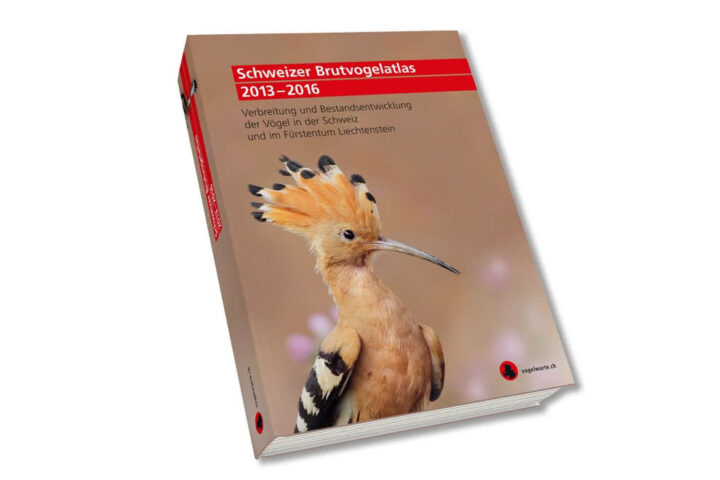
Knaus, P., S. Antoniazza, S. Wechsler, J. Guélat, M. Kéry, N. Strebel & T. Sattler (2018): Swiss Breeding Bird Atlas 2013–2016. Distribution and population trends of birds in Switzerland and Liechtenstein. Swiss Ornithological Institute, Sempach.

References

Shop

Donate
Help the birds of Switzerland.
Your support allows us to monitor stocks, identify problems, develop solutions and provide assistance to endangered species.
Donate Now
Logo Zewo

We handle the donations entrusted to us very carefully. For many years, the Swiss Ornithological Institute has carried the ZEWO seal of approval for non-profit institutions.

Swiss Breeding Bird Atlas 2013-2016

Birds face a changing world

The state of birdlife reflects our relationship with nature and our landscapes. The atlas presents the current distribution, abundance and altitudinal distribution of all breeding birds in Switzerland and Liechtenstein with unprecedented precision. Most importantly, it highlights the profound changes that have taken place in the Swiss avifauna over the past 20 to 60 years. This comprehensive reference book provides an important foundation for the protection and conservation of native birds and their habitats.

Learn more