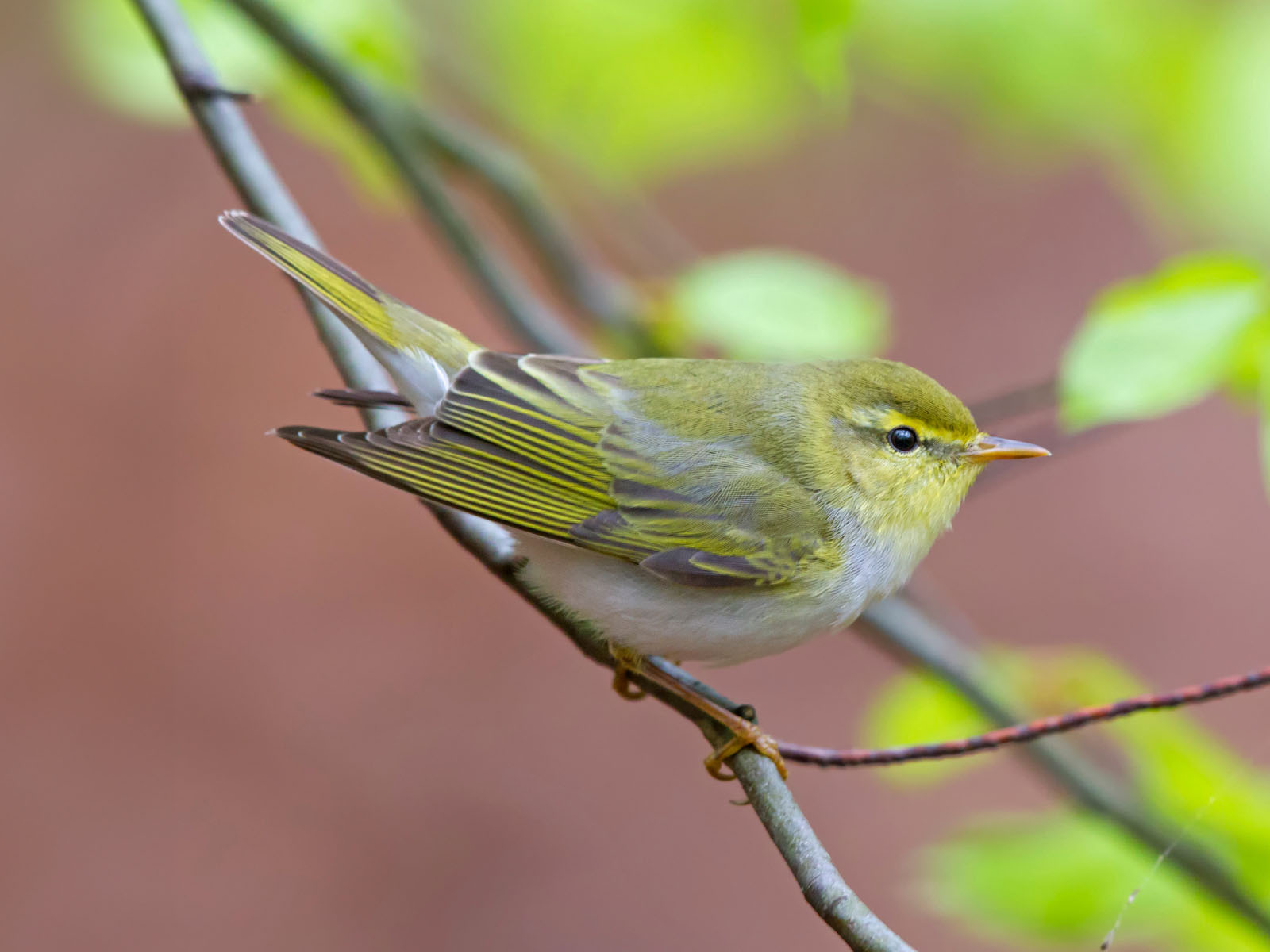

Nest site characteristics and nest survival of three sympatric Phylloscopus Warblers in the Swiss Jura
Zusammenfassung
1. Migratory, ground-nesting songbirds may be particularly susceptible to nest predation, as their nests are accessible to all potential predators and they have a truncated period in which to breed.
2. One such songbird, the Wood Warbler (Phylloscopus sibilatrix), appears to be extremely sensitive to rodent abundance. It demonstrates unusual nomadic behaviour, apparently to switch to forests with low populations of rodents in years of regional rodent outbreaks. This strategy is thought to enable the Wood Warbler to avoid the mesopredators that hunt rodents on forest floors and, in the process, opportunistically find and depredate Wood Warbler nests.
3. However, other Phylloscopus species that are sympatric to the Wood Warbler do not demonstrate this nomadic behaviour. This suggests that these congeners may be less sensitive to nest predation than Wood Warblers.
In 2018, we found and monitored 34 Wood Warbler nests, 41 Bonelli’s Warbler
4. In this thesis, I analysed nest survival rates and nest site characteristics of sympatric Phylloscopus warblers (Wood Warbler, Western Bonelli’s Warbler P. bonelli, and Chiffchaff P. collybita) to assess whether their responses to the same predation pressures differed.
In 2018, we found and monitored 34 Wood Warbler nests, 41 Bonelli’s Warbler nests, and 12 Chiffchaff nests in the Swiss Jura. We used trail cameras to identify nest predators and measured the vegetation characteristics of these nests.
6. Only 29% of Wood Warbler nests fledged young, in comparison to 41% of Bonelli’s Warbler nests and 50% of Chiffchaff nests.
7. For the first time in the eight years this system has been studied, the dominant nest predator was the Eurasian Jay (Garrulus glandarius), which depredated two times as many nests as had ever been previously documented. 57% of all Bonelli’s and Wood Warbler nests failed as a consequence of jays, while no Chiffchaff nests were depredated by any avian predators. This may be due to reduced overlap of jays and Chiffchaff nest sites, or more secretive Chiffchaff behaviour in the vicinity of the nest.
8. Nest survival rates decreased with both increasing nest age and nest site steepness. Nest survival rates were positively correlated to either few or many large trees and snags at the nest site, but not to intermediate quantities. Nest survival rates showed no trends with any other vegetation characteristic, and models of nest survival rates were not improved by the inclusion of nest concealment. Chiffchaffs had higher nest survival rates than Bonelli’s and Wood Warblers did, which themselves did not differ. These findings highlight the importance of accounting for between-species differences in nest survival rates within a study system.
9. Our study suggests that Phylloscopus warblers in the Swiss Jura experience different rates of nest success. It is not clear why Bonelli’s Warblers, whose nest survival rates were similar to Wood Warblers’, appear not to show nomadic behaviour. Similarly, Chiffchaffs may experience higher nest survival when avian predators dominate, but this advantage may disappear in a year with more typical rates of jay predation.
10. Further long-term research is recommended, paying particular attention to jay populations within the study site, season-long tracking of Chiffchaff nest success, and whether Phylloscopus behaviour at the nest site may influence nest predation rates.