
Oiseaux d’eau hivernant en Suisse: résultats de plus d’un demi-siècle de recensements
Zusammenfassung
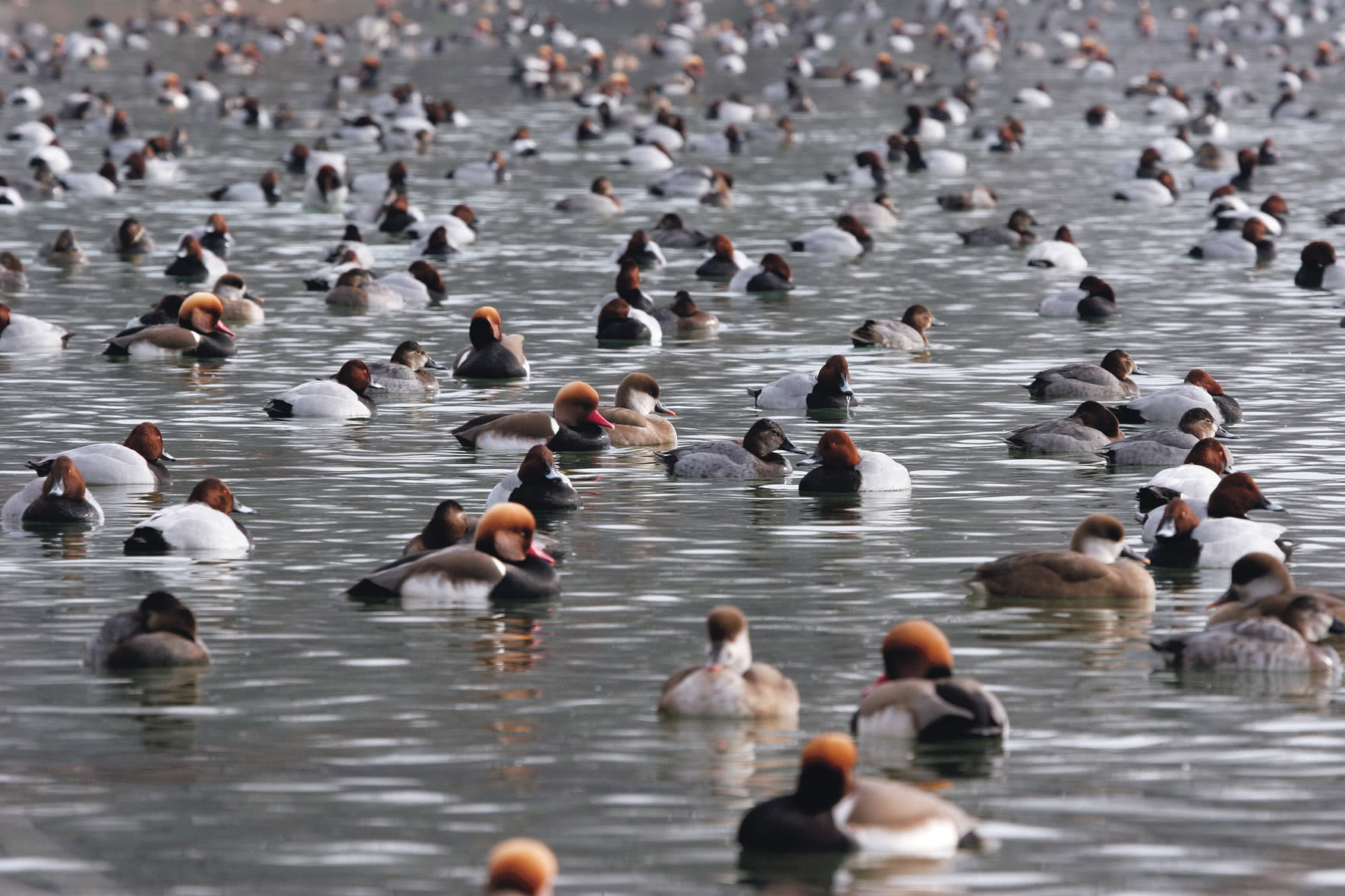
Environ un demi-million d’oiseaux d’eau passent chaque année l’hiver au bord des lacs et des cours d’eau suisses. Depuis plus de cinquante ans, leurs effectifs sont dénombrés dans le cadre des recensements internationaux des oiseaux d’eau. Cette base de données nous fournit un tableau détaillé de la répartition et de l’évolution des effectifs des différentes espèces hivernant en Suisse et permet des comparaisons avec leurs tendances globales. Les plans d’eau les plus importants pour les oiseaux d’eau (lacs de Constance, de Neuchâtel et Léman) hébergent environ 70 % des hivernants. L’évolution des effectifs nationaux de janvier peut se répartir en trois phases : une forte hausse entre le début des recensements (1967) et celui des années 1980, une phase fluctuante, à un niveau élevé, dans les années 1980 et 1990, et un recul graduel depuis lors. La hausse initiale coïncide avec la colonisation des eaux par la Moule zébrée Dreissena polymorpha, mais elle pourrait aussi révéler un redressement des effectifs après l’hiver 1962-1963, sévère et dévastateur pour les oiseaux d’eau, ou un rétablissement suite à une exploitation humaine antérieure parfois importante. Le recul des effectifs observé depuis les années 1990 est imputable au déplacement des zones d’hivernage de certaines espèces répandues vers leurs quartiers de reproduction d’Europe septentrionale ou orientale par suite du changement climatique, qui, en Suisse, se fait également sentir au niveau de la répartition des oiseaux d’eau. Le Léman, où se réfugiaient autrefois de nombreux oiseaux d’eau en cas de froid rigoureux, a enregistré de très fortes baisses au cours des dernières années. Hormis les espèces qui déplacent leur zone d’hivernage vers le nord-est, les effectifs de bon nombre d’hivernants affichent en Suisse une évolution positive. Chez la plupart de ces espèces, la tendance est également positive au niveau international ; elles ont sans doute bénéficié de l’amélioration, à l’échelle européenne, de la protection des sites importants et des espèces. Le principal défi à relever à l’avenir consistera à protéger les hivernants des dérangements liés à la multiplication des activités de loisirs sur les lacs. En cas d’échec, beaucoup d’espèces d’oiseaux d’eau ne pourront plus exploiter le potentiel des lacs suisses pour leur hivernage.
Every year, around half a million waterbirds spend the winter on Swiss lakes and rivers. For more than half a century, their populations have been recorded as part of the international waterbird census. This database gives us a detailed picture of the distribution and population trends of the various winter visitors in Switzerland and allows comparisons with the largescale trends of these species. The most important water bodies, Lake Constance, Lake Neuchâtel and Lake Geneva, together host about 70% of all wintering waterbirds in Switzerland. The development of the January total population can be divided into three phases: A steep increase between the start of counting in 1967 and the early 1980s, a phase with fluctuating but high numbers in the 1980s and 1990s, followed by a gradual decline since then. The increase at the beginning coincides with colonization of the waters by the zebra mussel Dreissena polymorpha. Furthermore, a recovery after the extremely cold winter 1962/63, and also a general recovery of the unsustainably used waterbird populations may have contributed to the development. The declining populations since the 1990s can be explained by the shift of the wintering grounds of some common species closer to their northern or eastern European breeding grounds, made possible by climate change. Climate change also impacts the distribution of waterbirds in Switzerland. Lake Geneva, to which many waterfowl used to migrate during severe cold, has seen disproportionately strong population declines in recent years. Apart from the species that shift their wintering area towards the northeast, many species show a positive population trend. For most of these, the international population trend is also positive, and they may have benefited from improved protection of species and areas throughout Europe. A major challenge for the future is to protect wintering waterbirds from disturbance due to the year-round increase in recreational activities on our lakes. If this fails, many waterbird species will no longer be able to exploit the potential of the Swiss lakes as wintering grounds.
Mitarbeitende