Anthropogenic influences

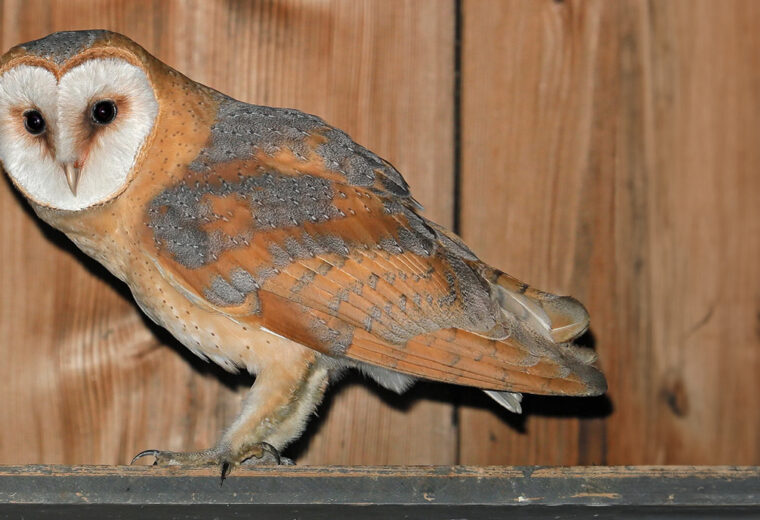
Space use and social interactions among neighbouring breeding barn owls (Tyto alba)

Outline

Understanding why some species thrive while others decline is a central goal of behavioural and evolutionary biology. Addressing this requires detailed knowledge of how individuals interact with both their non-social environment (habitat, resources, weather) and their social environment (conspecific density and interactions). Nest box-based RFID monitoring (ANISCA) allows us to quantify social contacts at the nest box, but it cannot reveal how individuals use space relative to their neighbours once they leave the nest box. In most solitary species, it remains unclear whether breeding individuals with overlapping home-ranges not only share the same hunting areas spatially, but also use them simultaneously, or whether they avoid temporal overlap. These spatio-temporal patterns directly influence competition for resources and opportunities for social interaction. By deploying GPS loggers on breeding pairs at nest sites that overlap in space and time, we can now directly quantify individual space use and link it to each bird’s social phenotype derived from nest box RFID data.

Aim

This MSc thesis aims to characterise home ranges and pairwise spatio-temporal overlap among simultaneously tracked, neighbouring breeding barn owls, and to test whether the degree of spatial overlap between neighbours is associated with their nest-box-derived social phenotype (prospecting frequency, contact rate). The project focuses on static space-use patterns during the tracking period rather than fine-scale movement decisions, providing a first robust description of how breeding neighbours partition or share space.

Project details

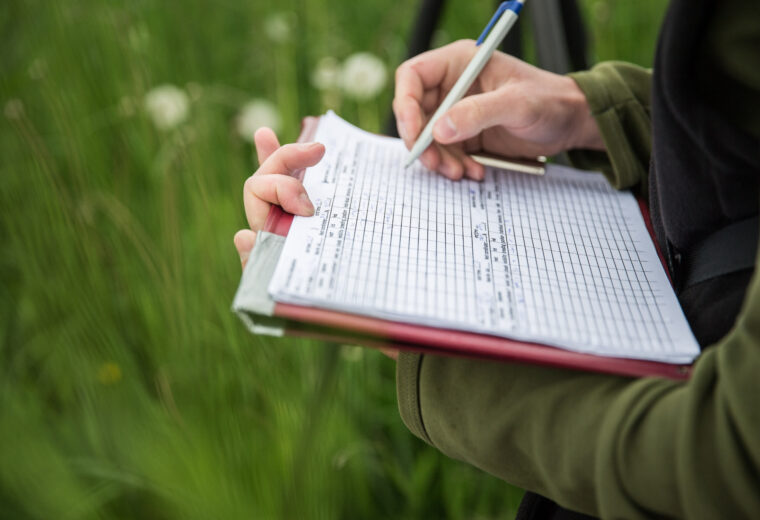
Collecting and using GPS data from up to ~40 breeding adults (20 breeding-site pairs selected for spatial proximity and temporal overlap), the student will process and clean movement tracks, estimate individual home ranges (kernel density/autocorrelated KDE), and quantify pairwise spatial overlap between simultaneously tracked neighbours (e.g. utilization distribution overlap indices). These overlap metrics will then be linked to each individuals existing ANISCA-derived social phenotype using mixed-effects models. The master student will participate in fieldwork as part of the barn owl field team during the breeding season (April-September 2027), including nest-box controls, GPS deployment and retrieval, ringing and measuring of adults and juveniles, and ANISCA maintenance. Accommodation during field work is provided in a field apartment in Estavayer-le-Lac. The student will work closely with the PhD student, aiming for a manuscript-ready thesis supported by a fully reproduceable codebase. Transferable skills include movement-data processing, spatial analysis in R (amt, ctmm), version control (Git), transparent reporting (Quarto), and data visualisation. A focused field season provides experience in bird handling, GPS tagging, and organised fieldwork.

Requirements

Interest in spatial analysis, coding, statistical modelling, and fieldwork with barn owls (both day and night work). Available for a minimum of 12 months. Starting date February or March 2027. Previous experience with R required; experience with spatial/movement data desirable. Basic knowledge of French and a driving licence are desirable.

Supervisors

The student will be part of the Anthropogenic Effects Unit at the Swiss Ornithological Institute and supervised by Dr. Bettina Almasi (Group leader) and Ramon Sager (PhD Student). Fieldwork will be conducted as part of the field team in western Switzerland.

Master- & Doktorarbeiten

Forschung voranbringen

Die Schweizerische Vogelwarte ist eine private Stiftung. Sie betreibt in Sempach ein national und international anerkanntes Institut für Vogelkunde und Vogelschutz. Dieses vereint Grundlagenforschu...
Forschen

Anthropogene Einflüsse

Wir wollen verstehen, wie sich menschliche Einflüsse auf das Wohlbefinden, das Verhalten und die individuelle Fitness der Vögel auswirken.