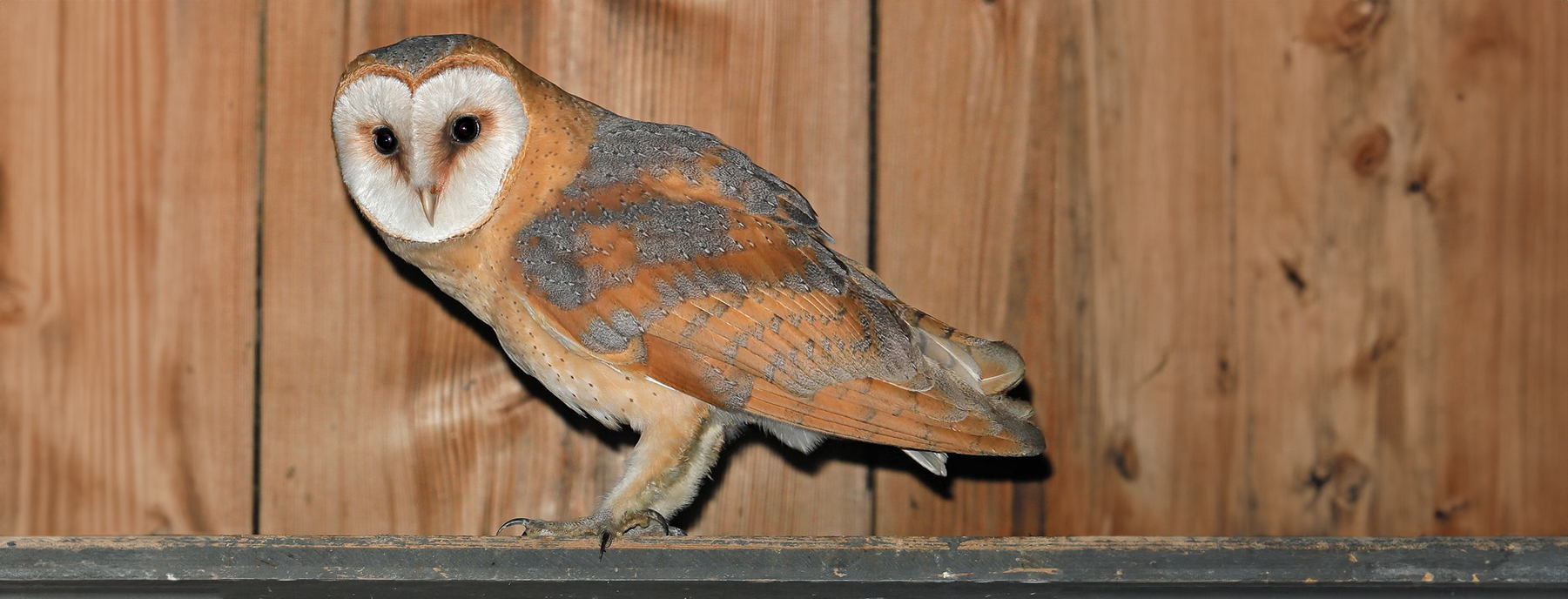
Menschliche Aktivitäten führen häufig dazu, dass Schadstoffe in die natürliche Umgebung gelangen. Dies kann wiederum die Gesundheit, die Fortpflanzung und das Überleben von Wildvögeln beeinträchtigen. Bei solchen Schadstoffen kann es sich um Chemikalien handeln, und deren Liste wächst rasch: Beispiele sind persistente organische Schadstoffe (Persistant Organic Pollutants, POP), Gerinnungshemmer oder Spurenelemente. Auch die grossen Mengen an Kunststoffen, die in die Umwelt gelangen, sind ein erhebliches Problem, da sie in Mikroplastik zerfallen und Chemikalien wie Phthalate freisetzen. Ziel dieses Projekts ist, die Schadstoffbelastung in Wildvogelpopulationen zu quantifizieren und ihre Auswirkungen auf deren Gesundheit und Fitness zu untersuchen.
Ökotoxikologie
Inwieweit sind Vögel Schadstoffen ausgesetzt und welche Folgen haben diese für sie?
Bereich
Forschung
Ressort
Anthropogene Einflüsse
Themen
Vögel und Mensch, Ökologie, Evolution
Lebensraum
Hochgebirge, Ackerland, Wald, Wiesen und Weiden, Gewässer, Felsiges Gelände, Halboffenes Kulturland, Siedlungen, Ödland, Feuchtgebiete
Projektstart
2022
Projektstatus
laufend
Projektleitung
Pierre Bize
Projektregion
Schweiz, Europa
Details
Projektziele
Vorgehen
Projektpartner
Donatoren
Fachpublikationen
Mercury accumulation and biomagnification in the barn owl (Tyto alba) food chain
Mahat, Sabnam; Almasi, Bettina; Kjelsen, Ingrid S.; Marmet, Dan S.; Heckel, Gerald; Roulin, Alexandre; Buser, Andreas M.; Mestrot, Adrien (2025)
https://doi.org/10.1016/j.jhazmat.2025.138269
Evidence linking cadmium and/or lead exposure to immunomodulatory effects in mammals based upon an adverse outcome pathways approach, and research perspectives
Hadjadji, Cloe; Devalloir, Quentin; Gaillard, Colette; van den Brink, Nico W.; Scheifler, Renaud (2025)
https://doi.org/10.1016/j.chemosphere.2024.144056
Is minimally-invasive sampling the future of persistent organic pollutant (POP) research in birds? A meta-analysis on tissue comparisons
Gray, Francesca E.; Derous, Davina; Bize, Pierre (2024)
https://doi.org/10.1016/j.chemosphere.2024.142591
Effects of persistent organic pollutants on telomere dynamics are sex and age-specific in a wild long-lived bird
Colominas-Ciuró, Roger; Gray, Francesca E.; Arikan, Kalender; Zahn, Sandrine; Meier, Christoph; Criscuolo, François; Bize, Pierre (2024)
https://doi.org/10.1016/j.scitotenv.2024.173785
Development and Validation of Microplastic Extraction from Feces of the White-Throated Dipper (Cinclus cinclus)
Berta, Simona (2024)
Distribution of polychlorinated biphenyls and polybrominated diphenyl ethers in birds of prey from Switzerland
Naert, C.; van Peteghem, C.; Kupper, J.; Jenni, Lukas; Naegeli, H. (2007)
https://doi.org/10.1016/j.chemosphere.2007.01.009
Mitarbeitende
FACHPUBLIKATIONEN
2022
Topography and wind moulding
directions of autumn migration between
Europe and the West African savannas Bruderer, B. & D. Peter, 2022
Further information: J Ornithol 163: 357–371
Contact: info@vogelwarte.ch
License: zenodo-freetoread-1.0
doi-Link: doi.org
PDF Download
Contact: info@vogelwarte.ch
License: zenodo-freetoread-1.0
doi-Link: doi.org
Flugverhalten von Nachtziehern
über dem Schweizer Mittelland und den Alpen im Vergleich
Bruderer, B., D. Peter & P. Korner,
2022
Further information: Der Ornithologische Beobachter 119: 212–231
Contact: bruno.bruderer@vogelwarte.ch
2021
Test
Bruderer, B. & D. Peter, 2022
Further information: J Ornithol 163: 357–371
Contact: info@vogelwarte.ch
License: zenodo-freetoread-1.0
doi-Link: doi.org
PDF Download
Contact: info@vogelwarte.ch
License: zenodo-freetoread-1.0
doi-Link: doi.org
Test2
Bruderer, B., D. Peter & P. Korner,
2022
Further information: Der Ornithologische Beobachter 119: 212–231
Contact: bruno.bruderer@vogelwarte.ch
Betroffene Vogelarten
Ressort
Anthropogene Einflüsse
Wir wollen verstehen, wie sich menschliche Einflüsse auf das Wohlbefinden, das Verhalten und die individuelle Fitness der Vögel auswirken.